Our adventure was limited by some key factors. It is low tourist season, and many sites are closed for the season, especially the lighthouses. Several museums and the Cape Hatteras Lighthouse are closed for renovation. It is holiday season, adding to closures and changed schedules. It is winter, so cold and windy on the outer banks of North Carolina, which led us to hang indoors or not venture so far away from shelter, when normally we might have taken longer hikes.
What we did experience, wherever we went, was to engage with people and encourage them to share what they knew of the locations and history of the outer banks. Some of our favorite locations for finding information included the following:
Fort Raleigh National Historic Site, Roanoke Island
Poor Richard’s (Poor Rudolph’s) Sandwich Shop and Pub, Manteo
Wright Brothers National Memorial
Outer Banks Visitors Bureau, Kitty Hawk, NC
Currituck Banks Maritime Forest Trail Lookout
Corolla Wild Horse Fund, Corolla, NC
The Kind Cup coffee shop, Corolla, NC
The Island Bookstore, Corolla, NC
Absolutely Outer Banks, Kitty Hawk, NC
Knitting Addiction, Kitty Hawk, NC
Outlets Nags Head shopping center, possible location of original Port Roanoke during time of sea inlet in the North Carolina outer bank at this location. Looking west across Albemarle Sound toward Roanoke Island.
We enjoyed speaking with park rangers, a retired wildlife management person volunteering at the Currituck Banks Forest Trail, and residents who shared their stories and information. We found maps, books, encouragement, and a shared love of the location and its multiple layers of history. We continued to find very few people who had knowledge of the early sea inlets of the outer banks. One resident believes that the original Port Currituck is at the location of the current Currituck Lighthouse, which is in the old village of Corolla, NC on the north end of the outer banks, at the current end of the road north, where the Corolla wild horses now reside and are protected.
Wright National Monument, Kitty Hawk, North Carolina
Geographical Take-Aways
Inclement yet beautiful beach weather, Kill Devil Hills, North Carolina
In my mind, as we planned the trip, I thought we might venture to more locations of interest… Elizabeth City, Currituck, Cape Hatteras, or even Northampton County or the Great Dismal Swamp. Spending more time in the car just sounded like NO fun, so those excursions will have to wait until another day. All of this continues to underscore how hard travel is in this part of the country. Everything is so far away, and so dependent upon bridges, which did not exist until 1928. Understanding how people traveled from this location to West Tennessee in the 1830s is still a topic I am keen to understand, and I look forward to discussing the topic with researchers who have expertise in early migratory patterns of eastern NC.
Here are new-to-me ideas that I am considering:
The height of dunes
That the Carolina outer banks dunes build up from southeastern winds and are taken away by northeastern winds
The consistent prevailing winds
That other than Native Americans, there were very few people on the outer banks until after WWII
The brackishness of the Albemarle Sound water shifting with the presence of sea inlets vs. their absence, which impacts type of fish and fowl present for hunting
Jobs for people shifting with the season, depending upon temperature and weather conditions impacting available fish/clams, and this would have been true also for indigenous peoples
The many rivers emptying into the sound at various points underscoring the relative ease in early history for waterway travel vs overland travel, especially prior to bridge construction
View of Albemarle Sound from Roanoke Island, Lost Colony
Successful Adventure
I can say, once again, that travel to see an location in-person has advantages over simply reading about the area or doing online research. So far, there is no huge revelation or break-through to report this trip. It would be unrealistic to expect such miracles for every trip. Yet, it is easier to understand what I read and research about the location and its history, now that I have visited. I can contextualize the information I acquire. It also may be easier for me to pose questions and theories that are sensible, and to locate the researchers/information I need to further my understanding and acquisition of data.
The Central to Northern Outer Banks of North Carolina (OBX) during winter months was a fun trip and worth the effort.
May all your 2025 adventures be all you hope, for connection, experience, enjoyment, and fulfillment!
The adventure is underway! The mission is to spend time in the Outer Banks of North Carolina, mostly as vacation, but also to experience the area that hosted the ports of Roanoke and Currituck in colonial times until 1800.
We drove from early morning until evening, and since now it is winter, it was dark when we left and dark when we arrived each day at the next location. Even though this is a road trip, I would not consider it a leisurely one, but rather a hard push, because that is the way we roll… eager to get to the destination! We traversed the full length of three states to get to the North Carolina Outer Banks.
Yesterday was our first full day here, and it was cold with periods of heavy drizzle and rain, but will be the warmest day of our stay. Today the sun is shining, though cold and breezy with 27 mph sustained winds and a high of 43 degrees F. Tomorrow will be even colder with 36 degrees predicted for tomorrow’s high. Maybe we understand now why this is low season for Outer Banks tourism?
We explored the northern reaches at Corolla and Currituck County, and we have been to Roanoke Island. I am processing what I have experienced and seen, and now I will share my points of contemplation, so far.
The states of Tennessee and North Carolina are really, really long. With newly uncovered legal documents that cite Jefferson Thomas Williams (d. bef 1870, Fayette County, TN), I need to retool his timeline to understand how his move from Northampton and Warren Counties in North Carolina to Fayette and Haywood Counties in Tennessee transpired 1830-1840. Was it one, one-way move, or were there some trips back and forth, and how did he, his wife Nancy Daughtry, and their son James L. Williams travel?
Is there any chance that they used river or sea routes, like to the Mississippi River from Kentucky and Missouri and downriver to Memphis, or to through the Albemarle Sound to New Orleans and up the Mississippi? If they did use waterways, would there be any yet existing documentation of their trip?
Asking questions about the colonial era Great Dismal Swamp or the early ports of Currituck and Roanoke tend to provoke surprise and often confusion. Evidently, the era/subjects are not common questions for park or visitor center workers. So far, I have found no printed material about the ports. It is fair to say that the average person has no idea about existence of the original Port Roanoke.
As when visiting Rome or Greece, even the eastern American seaboard exhibits evidence of many layers of history from the First Americans of indigenous origin through to modern times. I am reminded that some North Carolina genealogists have been frustrated that much of the regional research focus for decades was upon the Civil War and the periods just preceding and following the conflict. Common surnames and lack of digitized or centralized early records made it too difficult to research, with any success, families and individuals in the Carolinas and Virginia during colonial periods. Recent advancing technology, computer/digital/information sharing/DNA, brings more information for us to reliably examine.
There is a need to look further at modern researchers doing marine archeology in the Albemarle Sound, the tributaries, and Outer Banks. We also should encourage more research.
We need to do more study of the North Carolina State Archives online digital records and do further analysis of the colonial and early United States Outer Bank port information showing the parties, products, and vessels and what we can learn about the families, individuals, and locations cited.
Walking on the beach, even with moderate/normal conditions, the blowing of the sand is impressive, making it possible to appreciate how the terrain shifted over the years to open or cut off outlets from the Albemarle Sound into the ocean for sea-faring vessels to traverse. We note that the Wright Brothers National Monument at Kitty Hawk, is on a high point that was once a very high dune used by the brothers to test their gliders. In order to stabilize the dune for installation of the monument, workers planted vegetation… it does take work to keep any earth in place here.
The breezy winter conditions are a reminder of the wisdom of the Jamestown and Roanoke colony originators that the actual coast/beach would be a difficult place to establish a community. A bit inland would be better. Having visited both Jamestown and Roanoke Island now, I think Jamestown was more wise… After today, I had a hunch that if I were one of the original Roanoke Colony settlers of the 1580’s, the ones who disappeared and whose fate remains a mystery, I might be thinking of moving farther inland too. Just saying…
I visited the Outlets Nags Head today at 7100 S Croatan Hwy, Nags Head, NC 27959 , the place along the Outer Banks that, I read prior to my trip, is a likely location of the original Port Roanoke where, at that time, there was an opening through the banks deep and wide enough to allow access from the sound to the sea. Now, in common parlance, “Outlets” refers to a retail-shopping outlet mall. Do you think the potential double entendre of *outlet to the sea* was intended when naming Outlets Nags Head? I wanted to ask someone at the mall if there was an awareness of the colonial Port Roanoke port having been at the location, but I found no one official to ask, much less to inquire about the name. Tired for now of people looking at me funny, I did not ask the store clerks busy with holiday shoppers.
Thanks for following along. More observations as they come!
Currituck Lighthouse at Corolla, Currituck County, North Carolina, built in 1875
From reading my prior blog posts, you can probably surmise that genealogical trips are not a new thing for me. I have enjoyed traveling to genealogy workshops, courthouses, libraries, archives, and museums. I have gone solo, but alternately have brought along my spouse, willing and available family members, and have met up with DNA-found cousins for these adventures.
One dominant and, to me, unpredicted take-away about my trips is that seeing and personally experiencing a geographical location gives me information that I cannot get online. I cannot tell you in advance what I will find. Sometimes it is a clue or fact, like evidence of a name or a photo of a house, or an actual house that was owned by an ancestor, found in an old city directory that is not online.
Sometimes it is a geographical feature or land formation that is unique from what I imagined or have experienced. I confess, I had to actually see the Grand Canyon to truly appreciate the vastness of it. Hiking the Great White Sands, at the encouragement of my spouse, despite my hesitance, allowed me to appreciate the three-dimensionality, shifting topography, and challenges in navigation without GPS or compass. When researching ancestral migrations, seeing and experiencing the actual locations can give clues for understanding how they lived and functioned in their daily lives; why they moved to another location; obstacles to transporting themselves, their possessions, and any products; and therefore, other potential sources of information about the ancestors or their friends and family.
There are many who will tell you that before setting out for a genealogy expedition, in order to make the best use of your time, you should fully research your destination, making sure the locations will be open and accessible to you; that you identify what you want to research onsite, since many items are available online anyway; that you have been sure to check ahead that items you want to see are not currently stored at an offsite location or off rotation due to upkeep; and to have your notes prepared for quick access to maximize your time, etc, etc. There is more prep to share, but you can find all that advice elsewhere.
For a different experience and blog series, I am going to share with you as I proceed to the Outer Banks (apparently, commonly OBX) of North Carolina, a location to which I have never been. Acquaintances have been to the OBX for annual summer vacations, and I always found it fascinating, since it was never on my radar. Over the past few years, it has become evident that several ancestral lines of interest were in Northeastern North Carolina from colonial times until the 1830’s, particularly Northampton County adjacent to Hertford County, North Carolina. Many of those families eventually located to west Tennessee, especially Haywood, Fayette, and Obine Counties. Sorting the different haplogroup lines of Williams, particularly, have led to examining land and probate records. Then recently, the North Carolina State Archives published existing records of colonial era sea ports of North Carolina, which deepened my fascination with the area and my desire to understand the function of the Albemarle Sound, the Chowan and Meherrin Rivers, and their functional relationship to the northern portion of the NC Outer Banks.
I am going to break a lot of my normal blogging rules to document my upcoming excursion.
This trip is more about relaxation with family and canine companionship than about genealogy
Little planning has gone into this trip. And I refuse to care about that.
Normally, each of my blogs is a research paper, written with care before posting. This time, I will write quicker summaries, in keeping with the fun/downtime nature of my trip and desire to be connected with those sharing my adventure, and also documenting my experience to inspire others to genealogical travel.
I will be experiencing the OBX as a modern-day visitor, while imagining what it could have been like in the 18th century. Can that be done? Not sure, but seeking historical maps; experiencing the ocean/marine life/weather conditions/flora and fauna surely will help me connect with our ancestors’ experiences.
Thanks for following along, and thank you for your grace in what may be spotty coverage. I anticipate posts at least every 4 days, maybe more frequently. Due to my blog plan, there may be more typographical errors than usual. I appreciate your forbearance. More to come!
NOT the Outer Banks, but where our Williams were by 1875, the foothills of the Ozark Mountains in Arkansas.
Recent world events have me thinking again about how distant people have become from each other…distant from their prior accustomed social circles… churches, families, neighborhoods, schools, friendships. Check my earlier posts in this estrangement series, if you have not already, for discussions about alienation and estrangements and the many causes, impacts, and permutations.
We have spent time discussing the pain of estrangements and how difficult they can be, regardless of where one is in the estranged space. There often is a tendency to want things fixed sooner rather than later, and expectations often are all-or-nothing…and sometimes, to have it “fixed” yesterday. What if there is another way forward that we have not considered before? Rather than all-or-nothing approaches and expectations, regardless of where you are within an estranged situation, consider whether MOSAICS can show another way to move to a better space.
I am a fan of mosaics. Visualize a large piece of art or image which, upon closer inspection, is made of smaller pieces, maybe dime-sized or smaller. Mosaics may be made of glass, jewels, metals, stones, paper, cloth, guitar picks, or pretty much any other object you can fathom. You also may have seen large images that are made of tiny mosaic pieces that are tiny photographs of non- or semi-related subjects.
Abstract mosaic based upon color and directionality
Often children or art students experience mosaic projects in their art classes, or as kits gifted or purchased. The finished items can become wall art or stepping stones.
In travels, wonderful mosaic creations are destinations of awe. One remarkable location is The Cathedral Basilica of St. Louis. It is the *new* basilica in St. Louis, Missouri, not the original edifice on the Mississippi River. Many of the spaces within the cathedral feature glass mosaic installations by over twelve artists, including Tiffany Studios, each artist designing a specific room or area. With the right light, the mosaic images are spectacular and inspiring, whether viewed at close range, or at the highest expanse of the interior dome.
A example of a basilica installation. Photo by Pixabay on Pexels.comA basilica mosaic starts with small pieces, fit onto a cartoon of a designed image. Design can occur with many inspirations and methods.At the essence is the single mosaic piece.
One of my favorite experiences with mosaic has been to rescue a beloved object that has broken and to refashion it as an art piece. Sometimes there is nothing to do but throw away broken glass. The object may be so fractured into such small pieces or dangerous shards that the pieces cannot be safely repurposed. If one is fortunate, the broken pieces can be gathered safely, placed artistically, and mounted onto a base that can be framed, using forms of adhesive and grout to secure the items so that we can visually enjoy them again.
Created from broken fragments of a small, gifted Japanese teapot
Similarly, found-glass fragments can be collected, whether from clearing an old building site, an attic, a cellar, or estate sales. One can find vintage pieces, from broken medicine bottles, jars, stoneware, glassware, or china. Each piece has a story. If the items are from your past or the past of people you know, you sense the story that they hold. More often, the fragments’ origin stories are lost to time. Still, these antique items can be used as mosaic pieces to fashion a larger piece, either strictly for decorative use, or for practical use, including coasters, hotplates, or garden installations. The idea of lost, broken pieces from the past, composing an integrated piece of art that speaks to us, truly, is a special, inspiring act of creativity.
Some found objects and glass, joys to locate, with potential for a larger creation
I recently, evidently late-to-the-party, came across a technique for making mosaic designs from isometric graph paper, which features equilateral triangles. The technique is in common use among some quilters and other fiber artists who design three-dimensional effects. Colored pencils are applied to individual triangles on two-dimensional paper, the colors used to indicate shading and highlight of shapes. It is you, the artist, who makes the choices required to bring the flat images into 3-D relief. The choices are boundless/unlimited. Practically, the grids are translated to mechanisms to bring a fabric or item to life. For us, the practice shows how our mind can move pieces around just with our perspective and ideas. Each *piece* or triangle is important, and can be a part of something bigger, depending upon our perspective and inspiration.
Isometric patterns emerge with patience and colored pencil
So, these ideas inspire me as I think about estrangement and reconciliation.
Part of the inspiration comes from awareness of the wonder in acquiring one mosaic piece, not only as an object individually, but for its potential. After all… I suppose, technically, a piece is just a piece. It is only a MOSAIC piece through its potential to be acquired and given a place in a larger arrangement in which it is but one component.
What if, wherever one is within an estrangement–whether the one who estranged, the one from whom the other estranged, family/friends of the estranged parties, or one who is in the middle–one finds it possible to engage with the other briefly in a safe way…a friendly exchange, a congratulations, a birthday greeting. Maybe that’s it. No more. It is one element, one mosaic piece. Or, what if another, neutral but loving and concerned friend or family member within the situation provides support to you in some way, validating your sadness or anxiety, giving you reassurance and expressing concern? Well, that’s another mosaic piece. Maybe that’s it. No more. Perhaps you start to notice that you feel a little, tiny bit better about things, maybe some relief? Maybe some safety? Hmm. That’s another mosaic piece. Maybe that’s it. No more. Or, maybe it’s easier to pray about the situation with a little bit more positivity and genuine love. Yes, you guessed it…another mosaic piece. Any of these or other situations can occur individually or sequentially, and any positive or lateral movement is something to be noticed and accepted.
So, mosaic pieces, in this case, come as a surprise, a gift. They are NON-LINEAR–one does not necessarily lead to another, and if another piece arises, it may have nothing to do with the first one. When you receive the gift of a mosaic piece, you accept it, as best you can, and try to not flip into an all-or-nothing stance… of needing to single-handedly wish/compel a full reconciliation. In a way, accepting mosaic pieces is a way to describe the fact that we are in a situation over which we have very little control.
“So, mosaic pieces, in this case, come as a surprise, a gift.”
Sea glass inspiration
The key is the openness to the experience and seeing the non-linearity. You do NOT have to totally open the door just because you accepted a mosaic piece that you find hopeful or helpful.
“You do NOT have to totally open the door just because you accepted a mosaic piece that you find hopeful or helpful.”
Once you discover more mosaic pieces, you may find that they come to you from different estrangement experiences that are not connected in any way. Maybe you attend a reunion and discover information that is healing. Maybe from a memorial service you connect with a mutual acquaintance of the deceased. You have a conversation with a friend or trusted person that gives insight into a situation that broadens your perspective and softens your heart. Any of these experiences were not sought by you, and they perhaps were directly related to your estrangement experience. They likely come as total surprises to you. Yet, the insights from these singular events can apply to the big picture, including the estrangement. And each experience is another gift of a mosaic piece in your growing acquisition.
Another analogy is that as you collect one mosaic piece, you place them as you consider layout. In doing so, a larger picture emerges, based upon hints or features of the pieces you amass. Mosaic pieces’ size, shading, and detailing hint toward a larger view and inspire a comprehensive arrangement. The same approach applies to emotional and intellectual mosaic pieces. As you consider them individually and in totality, you will integrate the concepts and experiences. Consideration can occur through contemplation, journaling, conversation, art, or music. All of these processes can take time, and likely they will shift with time, which is a normal growth and healing process.
“The key is the openness to the experience and seeing the non-linearity.”
Now I want to add a twist to the mosaic analogy. Depending upon your situation, the mosaic perspective is a tool to CREATE a solution to a particular dilemma. If, for example, you are in crisis, yet you are estranged from those who do care about you, is there a way you can find someone, an intermediary, to create a safe way to communicate your status and receive a modicum of support? Maybe a P.O. Box for notes exchanged? Maybe a blog for posting updates? Intermediaries sometimes create private Facebook Groups for rallying around a person in crisis, including illness or grief, and these are monitored/facilitated pages that can be a safe place to communicate. It can be relieving and healing to know that you can create mosaics as bridges toward connection while maintaining boundaries and safety.* A psychologist or trusted pastor may be helpful in creating such a mosaic or mosaic piece that would be safe for you.**
With this pen for perspective, example of how two tiny rocks found separately, each a pleasing shape, fit together nicely. Just two objects… all that is needed for this array.
Mosaic pieces, whether objects or experiences, are bits that we can accept when they come our way. As we collect them, we begin arranging them in ways that, if nothing else, help us to cultivate a sense of peace, healing, and compassion, allowing us to move forward in our progress toward wholeness. As lovely as large mosaic works may be, even small, meaningful ones may be all that we need for our peace.
May you find yourself open to seeing mosaic pieces as they arise in your life and to receiving comfort from them.
The concave edges for the circular “O” were an inspiration for this piece.***
*As always, individuals need to take into consideration their actual safety and should maintain necessary physical and emotional protection. Even in situations requiring significant boundary maintenance, mosaic concepts can be used for internal healing and reconciliation work.
**A recent article in the New York Times underscores what apparently is a troubling trend with “therapists” using TikTok for advocating estrangements from family, “Is Cutting Off Your Family Good Therapy?” Ellen Barry, New York Times, Published July 14, 2024, Updated July 17, 2024. While the trend ostensibly is strictly for people in abusive situations, the worry about the trend is several-fold: 1) The article stresses, correctly, the idea that therapists should not be telling clients what to do… boundaries are for patients to set. 2) TikTok videos about any mental health situation lack individual consultation and considerations, setting people up to assume a diagnosis or to take *advice* that should not apply to them. 3) The trend smacks of one-size-fits-all treatments which can contribute to much harm regarding individuals’ understanding of their situation and lacking the nuance and individuality each person deserves. 4) The article suggests the trend promotes a sweeping praise for and assumption of estrangement as beneficial. In fact, most people, in most situations, can establish healthy boundaries; improve communication; and empower individuation without the need for estrangement, even if they have episodes that are bumps in the road in their relationships with their friends and family. A good takeaway from the article is that each of us should guard against any feel-good trend, whether from a book/article/video/social media post/expert who advocates estrangement as a quick-fix for your mental health. Get second/third opinions, and understand all of your options and that situations/people are dynamic throughout one’s lifespan. Estrangements are not without serious negative risks for all involved. https://www.nytimes.com/2024/07/14/health/therapy-family-estrangement.html?unlocked_article_code=1.-k0.poJa.QXgEL44FIWUq&smid=url-share
***Special thanks to the student artists who contributed to this blog with their inspiration and artistry.
I am writing this during Christmastide, a good time to remember that if you are in an estrangement you are not alone. As I considered this summary installment, a jewel of an inspiration for our conclusion appeared in a 2019 holiday movie– Last Christmas, with screenplay by Emma Thompson and Bryony Kimmings. The starring actors are Emilia Clarke, Henry Golding, Emma Thompson, and Michelle Yeoh. It probably is categorized in the Christmas romantic comedy genre… but I think it is much more than that. The beginning is a little rough, not the typical romantic comedy, because Clarke’s character Kate is experiencing so many self-imposed hardships. Romantic comedies are supposed to be feel-good, right?
It really was not until the conclusion of the movie that I realized that it was a microcosm of estrangement and (mini-spoiler-alert) resolution. (Not much of a spoiler alert, because it is, after all, a Christmas romantic comedy, and you know it has to work itself out eventually, right?)
There is so very much in this movie to perfectly illustrate, in movie-fashion, many of the various elements of estrangement that we have discussed. It is lovely because initially Kate seems quite unaware of the nature of the mess she is in, and as the movie progresses, the viewer, and she, get a better sense of the various historical factors and interactions contributing to her current actions, those of others, and how the interactions have created her various estrangements. The nature of her insights and how she deals with them are what make the movie.
I am not going to spoil the movie for you. I know that life does not work itself out in the timeframe of a full-length movie; I know that many estrangements do not have happy endings in the fairy-tale way that we often wish would occur. But I do think there are cues in this movie that we can carry with us to hope for resolutions for our relationships and for ourselves, as they are possible, and those I can share with you:
Have a measure of humility and, if possible, willingness for insights, no matter how difficult. It is hard to admit when we have made mistakes and to take ownership of those mistakes. Self-awareness can help us grow, and discussing our shortcomings during conflict resolution also gives permission for others to do the same.
Do your best to see beyond the estranged person’s current or past behavior that has come between you. Expanding beyond your hurt to see possibilities impacting the other’s behavior to understand their story and perspective can help you. You may find a broader understanding of the person, which can lead to feelings of compassion and empathy and open paths of communication you did not previously see and consider.
In light of the above considerations, think of, and perhaps try, different ways of interacting with the situation or person(s) involved, using shifted expectations to try to get a different level or quality of interaction between the two of you.
Do your best to get out of your head, which can cause you to just look inward and engage in self-pity. If you stay in a victim position, your thoughts and actions will worsen your situation. Help others, show compassion, be kind, find a passion in giving of your time to others (with appropriate boundaries, of course!)
Be willing to ask for help and to discuss your sadness, concerns, or doubts with someone you trust, including trained professionals. These steps can facilitate your self-awareness, help you learn to articulate what you are feeling, encourage self-forgiveness, and allow for expanded insight.
Do take into consideration all the caveats we covered in earlier installments of this series, including need for self-protection and boundaries.
Christians, and everyone, really, are to honor each person we encounter. Of course, we are SUPPOSED to do so. Each human is always, already loved by God. Yet, our journey speaks to the hard work of the Christian life, loving those whom we may feel are unlovable and by whom we have been hurt or abandoned. To do this work, we pray for those from whom we are estranged, asking for guidance, insight, a spirit of forgiveness, and perhaps intervention to move each party beyond estrangement. We also pray for strength to carry on with peace, direction, and even joyfulness in our lives when estrangements continue unresolved. It is a process. It is not easy.
All our growth in understanding estrangements can help us in our genealogy journeys, as well, as we uncover historical events or findings about ancestors; as we are in contact with new cousins through research or DNA; and as we communicate our findings to our immediate and extended families. We certainly want to recognize social injustices, pain, and harm and not excuse or whitewash them. Hurtful historical events impacted the lives of those who lived them and those who followed.
As we move through the world, may we do so with grace, kindness, and an open perspective for the lives of those we meet, past and present. Doing so provides a path toward resolution and reconciliation, if it may be so.
So far, we looked at estrangement from several angles. We looked at it from the perspective of one who needs to estrange from another; from that of one who experiences that someone dear to them has pulled away; the particular difficulty when the reasons for estrangement are partially or totally unclear; and the confusion of being in-the-middle between estranged parties.
Today let’s look at another factor that may be invisible to any or all of the estranged parties. That factor is a trauma that occurred in one or both families of the parties one or more generations prior to their birth. These traumatic events may be referred to generational, inter-generational, trans-generational, or multi-generational trauma, expressing that a significant trauma experienced in one generation can impact the lives of those in succeeding generations.
As you read today’s blog entry, be aware that the topic of multi-generational trauma in our estrangement discussion was planned from the outset of the series as a result of genealogical findings and experiences. As the horrors of current and recent events have unfolded, there are too many examples of the trauma close at hand. While these current traumas are direct examples for us to consider, they are not the focus of our discussion. The emphasis here is upon the need to be aware of the potential for the presence of multi-generational trauma within any estrangement, even if it is invisible or not consciously known by any or all of the parties involved.
While this post is not meant to be an authoritative, academic investigation of the phenomenon of multi-generational trauma, it is worthwhile to look at the concept; ways it can be viewed; how it can apply to us and those we love; and what it can mean for our future, outcomes, and happiness.
On the one hand, that a trauma will affect future generations of offspring can seem very intuitive. If a war breaks out and if a family’s safety is threatened, they evacuate, experience bloodshed, barely escape, and find safe harbor in another country, never to see their homeland again, that is traumatic. It is traumatic to each person who experienced the trauma, whether adults or children. If there is physical harm to any of the parties and/or if there is significant loss of financial stability, there is impact upon each family member. Are parents available to care for the children; are the children able to get their education; are any family members further victimized due to their tenuous situation? Any of these, or other, consequences of the trauma create impact in addition to the original, first trauma.
Even children who are born after this traumatic event may suffer from the impacts of the trauma. They may be born into poverty; parents may be focused upon providing for physical needs of the family and unable to attend to them otherwise. There may well be post traumatic stress disorder (PTSD) impacting the mood and availability of the adults, with possible additional secondary substance abuse or other addiction impacting the individual and family system.
These issues alone, situational and emotional, can lead to a domino effect in successive generations for risk for disease, educational opportunity, and ability to procure employment.
Even if we just look at emotional issues with a bit of a magnifying glass– what impact would the trauma have upon a surviving parent’s emotional health and ability to parent secure, healthy children? At risk for the children are attachment, trust, security, appropriate emotional expression, risk for fear of abandonment, the ability to maintain stable relationships across time, and skills in healthy conflict resolution. Problems in any of these important elements of human development can contribute to potential for relationship problems, future ability to parent, and risk for estrangement later in life.
Potential Cellular Changes?
Emerging science, as yet not fully understood, reveals that trauma can impact how our DNA is carried in our bodies and transmitted to our offspring. Yes, really. The concept is called epigenetics, and the basic premise is that when one experiences significant trauma, it can impact one’s biology in a way that impacts one’s genes’ ability to be expressed or to function as intended.
There is a fair amount of evidence that Trauma (and the capital T is intentional, to differentiate from trauma with a small t*) impacts our biology. When we are under siege, our body is in full-on alert, and all systems are activated to fight or flee for our lives. That is how we have survived thousands of generations on earth, rampant with fires, floods, and wild animals. In addition to natural dangers, humans have succeeded in finding all kinds of horrors to which we can expose each other. Some horrors are unintentional by well-meaning but misdirected people. There are children who were reared in eras with peculiar “how to raise your child” directives that were meant to be cutting-edge instructions for parents to raise the perfect children. Of course, wars and unspeakable cruelty of all sorts by broken, power-hungry, and evil people and systems wreak horrible Trauma, whether sudden and brief or prolonged.
Please know that Trauma or trauma, while impactful, does not have to be experienced by anyone as necessarily something that individuals cannot overcome. During an ongoing Trauma or trauma, it can help if one can have periods, even brief ones, to withdraw to a place of calm, physically or mentally, to bring down pulse and respiratory rate. Additionally, it helps during, or afterward, to express emotions through talk, writing, any art form and to have connection with others. When people can be in a safe place with appropriate support, there are treatments and modalities that can be very impactful in supporting an individual’s ability to survive, heal, and thrive despite the trauma. That is not to minimize the trauma, however, which does impact one’s life and turns to a different direction, one way or another.
We are interconnected. Clockworks, Monymusk, Scotland, UK
Sources of Trauma and Ability to Identify
For our purposes, understanding our relationships with others, especially through the eyes of a genealogist, it is important to know that trauma can be an invisible element of broken connections. Even for traumas that are historically documented in newspapers or books, the trauma may not be known to us because the family did not talk about it. Other traumas are not to be found in newspaper articles or books, because they were private occurrences, likely borne as secrets.
Generational traumas against ethnic groups are significant issues indeed. While there are commonalities among individuals experiencing ethnic targeting or ethnic cleansing, there also are specific impacts informed by the specific story and circumstances of the impacted ethnic group, whether First Americans, African American enslaved, Jewish, Ukrainian, Palestinian, or other groups. The associated situations, dangers, and threats would impact each family.
Trauma can be visible as an event known to have occurred, such as harm or displacement during a war; the physical impact of a natural disaster such as a major tornado, hurricane, flood, or wildfire; or accident such as a car, train, or airplane crash or urban fire.
The source of trauma also can be invisible to outsiders. Invisible traumas include displacement from war or conflict accompanied by avoidance of affiliation with one’s ethnic group–passing as a member of another ethnic group in order to survive; bearing the burden of a secret assault; carrying an untimely or unwanted pregnancy; and secretly experiencing violence or family substance abuse at home. In past eras, having a family member with significant mental illness was kept secret.
Individual Differences in Experiencing Trauma
It is important to realize that even with the SAME trauma, not all people, regardless of whether they are children or adults, will experience, react, or process the trauma in the same way.
Repression and Denial. To not recall a particularly horrible Trauma is an unconscious defense mechanism. It is not unusual to find that someone has repressed an abusive or traumatic assault. Additionally, not talking about an event, even if they do recall it, may be required for an individual to function, due to the pain/fear/shame associated with the event.
Shame and Guilt. While children are particularly prone to internalizing traumas and incorrectly seeing themselves as responsible for negative outcomes, adults certainly also engage in self-blame. When there is additional change in status or power, victimization by abusers, or denial of one’s self or culture, there is additional shame and guilt likely to be present in survivors of the trauma.
Fear for Safety. Sometimes the original trauma is problematic for the individual because there is fear for the safety of themselves and/or their family. The danger may be from the perpetrator, someone else who may punish the victim should it be discovered, or family conflict or violence if the situation were to be discovered.
Loss of Family or *Institutional* Knowledge. Sometimes the victim has died, leaving a young child who either does not know or does not understand the event, so the story is not passed down. Even when the parent survives, physical or emotional conditions can impact that parent’s ability or desire to communicate, not only the occurrence of the trauma, but even the broader picture of the family’s story/culture/history.
Our ancestry and family stories extend back so many generations!Edinburgh, Scotland, UK
Why Does Generational Trauma Matter in Estrangement?
In the course of doing our genealogy, it is inevitable that we will run across an ancestor, either ours and/or an ancestor of a cousin, who has behaved badly. How badly the specific ancestor behaved can be across a spectrum, with the worst extreme being horrible, injurious behavior or unexplained, devastating abandonment. How do we understand this person and his/her impact?
In no way do we wish to condone or excuse the bad behavior, but as researchers, we are looking for the truth and to understand the story in the broadest, most informed perspective possible. Someone who has acted this badly may well be someone who experienced an abuse or trauma by someone, somewhere. If we keep that fact in mind as we do our research, we may find bigger pieces to the puzzle that put the individual’s behavior in context and expand our understanding of their family, community, or micro culture. Interviewing descendants; newspaper searches; court records; and church records can be sources of this information, along with DNA evidence.
In my experience, it is not at all uncommon to see an impact of the problematic or troubled ancestor, whether a more recent kin, such as parent or grandparent, or a more distant ancestor, upon the lives or behavior of the descendants. Examples include poor self-esteem; over-controlling or limited involvement in parenting; emotional dysregulation; difficulties with anxiety and depression; a tendency to cut others off (estrangement??) as an alternative to the hard work of conflict resolution; over-focus upon somatic symptoms as unconscious expression of anxiety or depression; excessive and injurious minimization/avoidance/humor/deflection to avoid connection, intimacy, or communication. Likely, all of these response styles are unconscious on the part of the bad actor. NOTE: These characteristics or behaviors DO NOT prove existence of trauma. I only intend to encourage you to show grace in your response to family members who may have these symptoms or tendencies and realize that it is POSSIBLE the the symptoms may have a more complicated history or origin, reaching back generations, than even they know.
Detail of ancient wall, Isle of Iona, Scotland, UK
A Measure of Humility or
You Think You Already Know, but Do You Really?
Wait, wait– what if the current estrangement is with a sibling, a cousin, an offspring, or someone we “know.” We share their history, their DNA, and to our knowledge there is no generational trauma… therefore, our loved one cannot be suffering from generational trauma. Otherwise, we would know it. Right?
NO. You cannot make that blanket assumption. Here are reasons you cannot assume that you know.
Even if you share DNA ancestors, you did not inherit identical autosomal DNA, even with full siblings. In that case, if there were epigenetic DNA changes as a consequence of trauma, each of you may have a different DNA heritage.
You inherit different things from each ancestor, which also explains different eye and hair color, facial features, and personality. And those inherited characteristics also make each person’s experience unique.
Each person’s personality responds differently to the same parenting.
Even siblings have different histories that impact them, including birth order; how each family adult interacts with them; educational exposures; peer exposures.
AND you may not know your full history yet. Imagine the shock of being 50 years old before discovering that your grandparent is an adult child of an alcoholic, discovered when the grandparent and their siblings start talking freely about their childhood, in unfiltered discussion in your presence. Suddenly, with this new information, the family dynamics make sense in this new light!
Or suppose new DNA findings show a different ethnicity from what you thought you were. The new finding can put a familiar family story into a new light or context and point to generational trauma and its impact across several generations that you now can plot? One example is former U.N. Ambassador Madeline Albright who, at 60 years of age, discovered her Jewish and holocaust ancestry and family history when it was printed in an article about her in 1997!
Even increased insights into yourself as you mature and understand the world better can help you piece together family histories, personalities, and tendencies that show family complications and complexities you never realized existed. There is a benefit to maturity.
We have so many ancestors… we will never know all of our relevant histories and what has impacted our personalities and lives. So, we are naive if we think we know it all.
In Conclusion
We must understand that where there has been an estrangement, there may also be a significant generational trauma history. That trauma, whether in our ancestry; in the ancestry or recent history of the other person in our current, personal estrangement; or in both can unconsciously impact perspectives, reactions, and behaviors in significant ways. Even understanding the POTENTIAL for the existenceof a recent or generational trauma can create the beginnings of a thaw in the the relationship and openings for renewed connection.
William Williams
* Trauma with a capital T typically denotes a significant, recognizable event in which one perceives risk to life, while trauma with a small t represents a more sustained, possibly less visible, but no less impactful event or series of events, such as ongoing emotional abuse.”* Trauma with a capital T typically denotes a significant, recognizable event in which one perceives risk to life, while trauma with a small t represents a more sustained, possibly less visible, but no less impactful event or series of events, such as ongoing emotional abuse.
Resources
Multiple Resources for Stress and Trauma, American Psychological Association, apa.org
In-the-Middle can be a cozy, happy place to be– among good friends for a celebration or cheering on your favorite team with like-minded fans. In-the-Middle can alternately be an unpleasant place to be– at best, a place of uncertainty of your spot and unable to see your way forward; or worse, between two friends who are in the midst of a vicious, hurtful, possibly inexplicable, and seemingly permanent rift.
Today we will pivot from our outlined plan of presentation briefly to talk about an issue that does arise for you, one hopes, never, or exceedingly rarely.
What is one to do when your close friend or relative asks you, explicitly or implicitly, to not associate and/or communicate with the person and, in fact, you discover that the friends have become estranged?
Depending upon your experiences, this may seem an easy question to you, but I assure you it is not always easy. In fact, it can be harsh and complicated, even hurtful, resulting in finding oneself in a no-win situation with no easy resolution in sight. How should one proceed?
Here are some considerations that may help people find their way through the dilemma.
What are the facts and revelations that have resulted in the estrangement?
Is there evidence of dangerous behavior or threats to safety?
Is there substance abuse contributing to behavior or actions of concern?
Is there untreated mental illness present?
Who may potentially be harmed or threatened by this person, and how?
Is there evidence of new concerns about behavior or boundary infractions from which individuals need to protect themselves?
Is there lying, disinformation, manipulation, and/or triangulation occurring, pulling people into conflict with each other?
Who is being threatened… the person issuing the estrangement; elders or children connected with either party; and are you potentially a victim, as well?
Richmond, Virginia Road Detail
Has there been enough time to safely gather the information needed to assess the situation, allegations, and facts?
An extreme example, for the sake of illustration: In national news recently a man, married with adult children, was arrested for alleged serial murders of several women, with more possible charges to come. By current accounts, the wife and children had no idea of the man’s behavior leading to the arrest. None of them have been to visit him in jail. This sort of discovery of information about someone you love is highly unsettling, frankly shocking, and underscores how new information about an individual can impact assessment of one’s personal, financial, and emotional safety.
Understanding the safety and security issues of all involved, of course, can help assess one’s stance in supporting and/or participating in the estrangement.
Are you able to honestly see another side to the person… to admit that your assessment of the person was incomplete, inaccurate, or just plain wrong?
Arguably, I think, one of the hardest things in life is to admit one is wrong about… anything; but especially about one’s assessment of a person.
I have seen families torn apart when a revelation, such as was described in the extreme example above, was not recognized by one or some family members, who insist upon supporting the offending party, even blindly not acknowledging the new information at hand. The danger of this lack of acceptance is obvious and often will be the reason that the party issuing the estrangement will be compelled to issue an ultimatum to friends and family in order to assure the boundaries of their safety and security, and of those for whom the person has responsibility of care.
“If you have Uncle _____ at your home for Christmas Dinner, let me know; I cannot be there with my children if he is present.” Such ultimatums are made out of a decision, right or wrong, to set boundaries for perceived need for protection and safety, at least emotional, if not physical.
What about a less-extreme example? In this case, the discovery is more about the health of the relationship/expectations/validating behavior in the offending party. Sometimes we observe others’ relationships in a new light and re-assess our interactions with that person. It can be growth to see that a relationship was not as healthy as you thought it was, that you were minimizing or overlooking unhealthy interactions. In such a case, you may choose to back away from the relationship, or approach it in a different way, based upon the new information coming from the estrangement.
CAVEAT: What about individuals who falsely assume the danger of certain individuals based upon their prejudice or bias?
There are, in some cultures and places, people with very rigid and not-well-informed perceptions about people on the basis of skin color; piercings; tattoos; hair style; religion; ethnicity; gender; sexual orientation; even affiliation with sports team (think Texas vs. Oklahoma or Vikings vs. Green Bay Packers… you get the point). If these, or similar nonsensical delineations, are the reasons a person is issuing an estrangement it makes no sense to go along with an ultimatum to join the estrangement. Uh… no!
Has there been no evidence of dangerousness, but there is an impasse and severed relationship between the estranged persons, both of whom you care for very much?
When there is no danger evident, deciding how to handle your relationship with each party in light of a stance by one or both that you should have nothing to do with the other may be harder to sort. Taking some time to assess what is happening and how best to respond can help you to take a stance. The first objective may be to process what may be a sudden event, revelation, and/or reaction. Since both individuals are important to you, you may find yourself significantly distressed.
For sure, good self-care is imperative, giving yourself space to process and tend to your needs for food intake, exercise, and sleep. Healthful ways of emotional expression can be helpful also, using journaling, art, and music to explore your thoughts and responses. As mentioned earlier, do what you can to engage to gain knowledge and discover what has happened, as best you can, safely and prudently, if you are uncertain about the circumstances of the rift.
Since there may be repercussions for you, and you desire to not exacerbate the rift, it may be helpful to speak with a neutral party to consider the situation, personalities involved, and how the situation impacts you. It can be helpful to speak with a reputable, licensed therapist; a trusted mentor; or a neutral friend whose judgement and perspectives you respect. Sometimes just speaking freely can illuminate the path; sometimes the observations of someone not directly involved can shine a light, as well. Also, once you become more calm, you will be able to engage creatively to discover ways to approach the situation and boundary parameters while still fulfilling what you believe to be a healthy way of addressing specific issues.
Getting feedback also can help you to think through what approach and boundaries you might set on the situation and what could be the potential fallout of each option. You may elect to honor the boundaries the estranging individuals have set with each other and underscore that their issues are between each other, while honestly telling each what you will, or will not, do and that your continued connection or interactions with each do NOT mean that you do not care for each of the two. In that case, you are telling them that you are not going to completely disconnect from either of them, and telling them in as honest and calm manner as possible. You cannot control the reaction of the party (parties), and it it is good to be as prepared as you can for an unwanted reaction, which is why taking plenty of time and utilizing discussion with a third party can be important. If you are fortunate, you can set forth a plan that is acceptable and will provide you some relief. Sometimes, you may set boundaries that are not necessarily articulated verbally, but are actionable for you and work well for the situation, given the circumstances.
Where does this leave us?
Not all people who are in estrangement issue ultimatums to family and friends… “You are either with me or against me.” or “if you choose to talk to ___ that means you do not love/believe/support me.” It is a much easier situation if you are told clearly why they are estranging themselves and let you know that you are free to make your own choice, but that they are issuing for themselves their boundary that they request you respect… For example, to please let them know if this person _____ is at your party, so they can decide whether or not to attend.
I think it comes down to a few key points.
Make sure you are as clear-eyed as you can be about the truth of the situation. Be aware that more information can come up, and you may need to re-assess.
Be sure to protect yourself and any for whom you are responsible, including children and elders, as best you can, and do your best to support others who are doing so.
Know that it IS possible for people to grow and change, so if people are estranged from each other now, they may make another choice later. And sometimes, people grow and heal! They go to therapy; they become clean and sober; they become more insightful. It is a good thing to be open to positive change as a possibility.
Otherwise, people’s estrangements are their own. Not yours. It helps to underscore both things.
You can respect other people’s estrangements, and in fact, you SHOULD, because it is their lives and needs they are acting upon, and you do not know all of the factors that went into their decision. But you do not have to feel responsible for them or for fixing them. From my perspective, this is a hard reality.
Some of the factors we have talked about in earlier segments and will discuss in future ones apply here too. Prayerful people may ask for guidance, clarity, and insights in dealing with their estranged people. Each of you may have skills and perspectives you can bring to the situation, helping others in similar situations navigate in creative ways. For instance, you may help friends plan for holidays, when segments of a family are estranged from each other, reminding them that it is okay to approach traditions creatively, celebrating with parties separately when possible and differently when necessary; holding and maintaining one’s joy for the meaning of the holiday; and engaging in appropriate boundaries and self-care.
Photo of trail map at Richmond portion of Captain John Smith Chesapeake National Trail.
The James River is a navigable river into Virginia, in the lower reaches at Jamestown it is tidal and brackish, used for millennia for transportation inland from the coastal areas, up to the point of the of the river which now is the location of Richmond, Virginia. When you travel upstream by river and arrive at Richmond, you encounter rapids down which folks can kayak. How cool is that!
Currently, the James River at Richmond is a destination for tourists, but it is highly utilized by local residents to hike, bike, and play. It is best if you know the area, how to get there, the location of the various trails, and where to find your way to what you want to experience. If you do not know where you are going, you may find yourself in the middle of discomfort and confusion. There is more than one land mass or island; there are bridges, some of great expanse, to take you from one land mass to another; it is not always clear at the outset if the bridge you have set upon will take you where you want to go; and distance and time estimations, as well as the nature of the path forward, are not easily discerned. At least one bridge, while semi-pedestrian friendly, actually is for delivering motor vehicles to the other side of the river, and it is quite a hike on foot. If you have plenty of water, the weather is mild, you have no timeline, you are in good physical shape, and you are not hauling your luggage with you and wearing dress shoes because you are killing time before you head to the airport (true story– I met someone on my adventure exactly in this situation), you will have great exercise as you enjoy a lovely and historic setting.
The discomfort of not knowing the trail routes; hoping you have enough water with you; and hoping you do not have to retrace your steps to return to town reminds me of some of the feelings and experiences of being in the middle of an estranged relationship between friends.
The similarities include being surprised, perhaps, at your lack of good information about your situation; having limited control of your circumstances; and not knowing how long the uncomfortable situation will last. At least on a hike, you can be fairly sure there is an end point, regardless how taxing it may be, and to some degree, that end point is within your control, if only because you continue to press onward.
How, when, or if the estrangement between your friends ends, may you continue to find healthy boundaries and self-care as you continue to be a friend to the parties, as best you can be, as long as it is healthful or prudent to do so. And when you cannot continue an active friendship, to wish them well in your heart and pray for continued healing of all concerned.
Street Art at James River Waterfront, Richmond, Virginia
How, when, or if the estrangement between your friends ends, may you continue to find healthy boundaries and self-care as you continue to be a friend to the parties, as best you can be, as long as it is healthful or prudent to do so. And when you cannot continue an active friendship, to wish them well in your heart and pray for continued healing of all concerned.
Earlier we looked at the concept of estrangement, particularly a separation from family or person with whom one has a close, familial connection and affection. We discussed the jarring nature of an estrangement, both from the perspective of one who separates themselves, but also particularly the perspective of the person who has been estranged. We also acknowledged the importance of boundaries in considering the nature of the estrangement how we should approach it.
Additionally, my caveat stands that the concept of estrangement is complex, with many causes, contributing elements, and cultural considerations that I will not pretend to fully address. My focus is upon the individuals, families, and genealogists who find themselves in the middle of an estrangement situation, either their own; of their extended family or friends; or of family or strangers we encounter in our research. There are considerations that apply across situations.
What would be the goal in approaching an estrangement? The actual, considered answer to this requires an expanded perspective and a lot of nuance, rather than a quick, easy answer. In fact, how each of us might answer this question, if we personally are in the middle of a current estrangement, would likely include a quick take, intense emotion, and potentially quite a lot of our personal perspective informed by our personal experience and our likely highly emotional reaction to our particular situation or set of circumstances.
Think about it. Would you think that two individuals who are estranged from each other would be in agreement about the cause and particular account of their estrangement? Or that it would be easy for them to sit down and hear the other’s side?
Wait, why am I even bothering with writing this? Maybe this is foolish. People should just remain mad, upset, and estranged, and forget about it. Move on. Writing about this is ridiculous.
But NO. It is NOT ridiculous. Estrangement hurts, and healing is important, even if it is just YOUR healing. We do live in community, and the more each of us can be open to others’ estrangement and be a voice of healing and comfort, the more the community can heal. The more the world can heal. Skills we learn in dealing with estrangement can help us resolve differences and conflicts, support each others’ boundaries, and help each of us to become healthy individuals living within healthy families and communities.
What follows are some considerations for approaching estrangement, either to heal, or to avoid furthering or continuing fracture.
We are humans, and humans are made to live in community. It should be generally considered that our families, for all their faults, love us and want the best for us.
If someone you respect and who cares about you has said something or done something you find hurtful, try to consider if there is some piece of information that you or they do not have. Why, possibly, could they have said or done what they did? More likely than not, one of you does not have all the data, or has misunderstood some of the data at hand to cause the miscommunication. It is always worth your while to go the extra mile to discover where the miscommunication may have occurred.
Be open to communication.
Be a good listener when the opportunity arises. This can be hard, because you may be in a position that you are being told things with which you do not agree, and which may sound false or outlandish to you. Fight the temptation to reflexively argue and express outrage, but rather, take a deep breath, take notes, listen. Try to find the grains of truth that may be in the statements you are being told.
Consider mediators or utilizing the assistance of a psychologist trained in conflict resolution or family dynamics and communication, especially if the other party reaches out to you.
Consider that you may be wrong, mistaken, or not hearing/understanding a very real issue being brought up by the other party. It may take a while to admit, address, or rectify, but it will be well worth the work. This is true of EITHER and/or ALL parties. Research and utilization of true experts can be helpful, as long as the parties are not just seeking confirmation of their opinions or biases.
It can be possible to hold more than one truth and find a way forward through compromise and collaboration. In other words, you may be right, and I may be right, at the same time.
Sometimes situations escalate to legal action by one or both parties Generally, it is better if the parties can avoid that step, since doing so can lead to decreased communication, and involvement of attorneys can increase likelihood of contentiousness. Still, legal action does not have to end badly, and one hopes mediation could be an alternate process to reach a resolution that would provide a path forward for the relationship.
I ascribe to a reformed Christian perspective, which, while affirming that boundaries and safety are important, strives for reconciliation where at all safely possible. Praying for the health, happiness, and healing of all parties, including those with whom you are feeling the most hurt and/or anger, is often hard, but an important step, not just for them, but for yourself. This active, prayerful perspective and practice is a PROCESS across time, and seeking spiritual support and encouragement can be helpful in accomplishing the practice. For those who are not Christian or even particularly religious, the concept is still viable and important, thinking of positive energy or healing, or good will and peace for all involved. The practice activates neural activity within us that we know will activate peaceful attitude, behavior, and communication with and from those around us, which can have an impact far beyond our immediate environment. Further, our more calm stance can allow a cognitive readiness for creative problem-solving that can help us find resolutions or difficulties, or at least openness to possibilities of healing. Research regarding mirror neurons affirms that how we activate and respond can impact reactions of others to us, and can help to keep us from negatively reacting internally to individuals engaging in dismissiveness or anger toward us. The power is undeniable, and it is within our reach, with practice!
From my experience, a hard stop or absolute decision to maintain estrangement forever should be an exceedingly rare decision or stance. It can be necessary if there is active, substantial, and dangerous abuse or evil intent, with no effort by the other party to seek help or respect reasonable boundaries. If the other person loves you, the motivation to change, listen, or move forward in growth can be high, assuming the individual has the ability to do so. Sometimes change takes a long time; sometimes hurt takes a long time to process; sometimes pride is a difficult thing to address and swallow, especially to try to see the other’s point of view/hurt/need for individuation, or working out previously unknown or unseen information. When we give the other person the time and space, it can be hard for us to not be impatient and judgmental about our perception that they should already accept/understand/get with the program.
Acceptance? What does that even mean? In the context, acceptance is a deep breath, a being okay that things are where they are, for now. If an estrangement is a new occurrence, we may find ourselves working diligently for estrangement to end. When efforts are blocked or ineffective, for our own health we can move to a cognitive balancing point, that while estrangement is not what we want, neither is resolution immediately possible or within our control. Rather than actively fighting against or railing against the estrangement, the state of acceptance is a place holder that things are the way they need to be for now, even if we do not like it. Coming to acceptance is not an easy journey, but the destination is worth it.
Recently, I had an opportunity to hear Rev. Bruce Reyes-Chow speak about his book In Defense of Kindness. He addressed estrangement and boundaries, and until he spoke, I did not realize that my default view of estrangements was a focus upon the hurt the estrangement causes those from whom one is estranged, not giving enough weight, perhaps, to those who make the choice to distance themselves. Bruce spoke of honoring the boundaries another may set, even if we do not understand or agree with with the boundary. He also referred to the fluidity of the state of estrangement. Estrangement may be the current status, but it might change or resolve later, or move in phases. The same fluidity applies to boundaries we set with others. Depending upon our growth, situation, needs, and perceptions of others’ behavior and our ability or energy to deal with it, we may change how firmly we hold our boundaries or where we choose to place them.
I am grateful for the opportunity to see estrangement and acceptance as a process. People are complicated, life is complicated, and we can only deal with what we are handed. That is, by ourselves, we can only do so much to impact an estrangement. Yet our action and inaction are not unimportant. As we will see in our next segment, harmony vs disharmony as stances have a ripple effect, potentially for generations to come.
–William Williams 2023
Kabat-Zinn, Ph.D., Dr. Jon, The Healing Power of Mindfulness. Hachette Books, 2018.
Reyes-Chow, Rev. Bruce, In Defense of Kindness: Why It Matters, How It Changes Our Lives, and How It Can Save The World. Chalice Press, 2021.
Siegel,M.D. Dan, Intraconnected: MWe (Me + We) as the Integration of Self, Identity, and Belonging (Norton Series on Interpersonal Neurobiology). W. W Norton & Co., 2022.
An estrangement feels like a chasm that cannot be bridged. Photo–All Rights Reserved.
The longer you live, and/or the longer you are a genealogist, the more likely you are to encounter an individual who has become estranged from their family of origin. How we think about estrangement impacts how we proceed. The difference we can make in the lives of others and/or their descendants can be profound, for better, or for worse. I want to challenge your ideas about estrangement and ways to move forward, not only for the benefit of those you encounter in your genealogy work, but also through your extended families, your friends or colleagues, and possibly for your family of origin and yourself.
Note: This article combines the scores (surely a hundred and more) of examples which I have experienced mostly in my professional and genealogical lives with a smattering of personal experiences. If you think you specifically recognize my examples, I think you do not, and I would refer you to the song “You’re So Vain…You Probably Think This Song Is About You,” Carly Simon, 1971. It’s worth a listen, anyway!
After walking alongside many, many individuals on all sides of estrangement, I feel I have been given a perspective that is worth sharing. Still, I certainly do not know everything. As we talk about estrangement, I will not address the issue of abduction or kidnapping followed by indoctrination, which would be a more specific sort of estrangement by individuals experiencing a unique form of victimization. Rather this article is to address estrangements by individuals who act of their own volition, although it is possible that there is a gray area that blurs the two distinctions. This is particularly true in cultures in which there is limited free press and there are fascistic elements meant to divide communities and families for political or economic benefit of those in power, or cultures that practice significant oppression of women or minorities as a matter of course.
Additionally, there are aspects, causes, and impacts of estrangement that others have experienced that I have not addressed in this piece. The fact that I have not addressed all types and circumstances is testament to my point that the issue of estrangement is quite broad, with many unique circumstances and factors, yet issues and perspectives for coping, approaching, and addressing can be useful across the variants.
In this first in a series of 4 installments, I will talk about the concepts of estrangement vs. boundaries and the different ways people may experience them. In subsequent installments, we will look at how we address estrangements, based upon our situation; the concept of multigenerational trauma and its impacts; and genealogists as potential agents of change and healing.
As humans, we are meant to connect with each other. Photo by Charlotta Fay Williams. All Rights Reserved.
As a child, my parents told me that I had a cousin, with whom my older cousins, aunts, and uncles had at one point been very close, who had married in another state hundreds of miles away; and who had basically ceased contact with his parents. “It was because his wife did not like…” something, I was told. I was too young to remember this older cousin, but I still felt impact of the break. I loved my aunt, and I could not imagine her pain of being separated from her son. My family was close, I thought.
My family was so close that later when my brother was overseas on peacetime duty in the military, I imagined that he was very lonely all the time, so much did I miss him. How could he stand being away from all of us who love him, especially during holiday celebrations? I later came to understand that his overseas experience, for him, was fun, liberating, and an adventure. But, of course, he was not estranged; rather, he was still connected to the family by phone and letter, and many years later he would return to live near his family of origin. I underscore that the notion of true estrangement from family seemed rare and almost unexplainable to me for many years.
Now, as an adult, I have an expanded view of estrangement. Work experiences and connections, family experiences, and dealing with my personal reactions to estrangement inform my perspectives. My writing is to encourage readers to open their hearts and perspectives in their understanding of individuals and/or families experiencing estrangement. Almost assuredly, in the course of genealogy one will come across individuals impacted in some way by estrangement, either directly or indirectly, from prior generations Your sensitivity to these individuals and their imminent or remnant pain and loss can prove validating, affirming, and possibly healing in ways you may never know.
Estrangement is defined as alienation, or a separation from family or social contact and affection. Typically, estrangement is unexpected and unwanted by those from whom an individual becomes estranged. The estrangement also can be unexpected and unwanted by those estranging themselves from their loved ones. While there can be similarities and generalities across cases, there are many individual, unique situations. Others have written extensively about estrangement, so I do not present a scientific or complete analysis of the phenomenon here, but underscore from a personal perspective the wide array of individuals’ experiences, viewpoints, and responses and ways we can respond appropriately.
Healthy Boundaries
Before we talk about estrangement, it is important to say a word about boundaries. We should all have boundaries, which we might define as spaces to give ourselves authority over our choices, beliefs, whom we marry, career choices, money and living choices, and how we rear our children. Cultures vary in terms of how, when, and how much independence we give our children and family members. It is typical that adolescent transition to adulthood is fraught with tension with parents regarding setting these boundaries, discussing them, and respect for them. We always hope that children and their adults work their way through these tensions. Sometimes they do not, or sometimes they do not until later in life. Happily, most families develop an ability to set boundaries effectively, parents with children and adult children, and siblings with each other. Not having a large immediate family of origin, I was always amazed watching friends who would spar with their siblings, particularly in large families; declare they were *done* with them; then a few months later or less, have worked out their differences, carrying on as best friends. Sometimes this meant not discussing certain topics, or agreeing to disagree, but they seemed to find areas of commonality and community to continue the relationships. Finding ways to set boundaries and make them work across time is an ongoing process of families, friends, colleagues, and neighbors.
A recent observation regarding boundaries is the importance of being allowed to grow and change one’s mind, goals, and opinions. There is a remarkable tendency, perhaps especially in today’s era of online presence, to assess others and hold them *accountable* for their actions, statements, and even identity, chastising any change in position. As an example, I have known individuals who decide to become physically fit; modify to a healthful diet; and implement an active lifestyle, receive huge negative blowback and obstacles from their family members and friends. Derision at family meals; accusations (unfounded) of having an eating disorder; and harsh, critical statements can be crushing, as though designed to force the individual back into the depressed, ill, unhealthful state where they began.
If you are the one setting boundaries for yourself, especially if you are striking a position that may be different from what others expect, it is good to know that there is a somewhat normal, though often frustrating, societal pressure to keep you where folks are accustomed to experiencing you. Seek support, as you need, from those who will give you positive support, even seeking professional help as an option. If, on the other hand, you find yourself feeling uncomfortable, possibly envious, that someone in your sphere is seeking to set a path that is different from your expectations and is setting boundaries to achieve their goal, avoid criticism. Recognize that seeking to give others the space to change and grow is not always easy…partly because their changes probably cause us uncomfortable re-evaluation of our beliefs and actions?
Individuals whose loved one has become estranged–
A fairly total block of communication and connection was my first exposure or experience to estrangement, as I mentioned in my opening, with my beloved family member in pain due to distance from a beloved son. Across time, I became aware of many complex situations that cause fractures in relationships.
An adult child with severe mental illness, off medication, who suddenly disappears from the community and discontinues contact for months at a time
A divorced parent being (in this case) almost certainly falsely accused of child abuse by an avenging and unstable ex-spouse involved in a custody dispute, resulting in the child being restricted from seeing the parent, sometimes for years
Siblings experiencing anger and disagreements resulting from parental divorce, death, remarriage, or addiction
Individuals whose child, sibling, or parent marries an individual with significant mental health issues, diagnosed or undiagnosed
In the listed situations, disagreements, misunderstandings, differences of opinion may be magnified to the point of rupture. In other cases, actual or perceived acts of injustice, uncaring, or breaches of trust have occurred. In some situations, distorted thinking such as paranoia or thoughts of persecution are part of the picture, negatively impacting the ability to deal with others in a reality-based, rational manner.
Individuals who feel a need to set a boundary so firm as to estrange themselves from one or more family members or friends–
When one attempts to set a boundary, but their boundary is not respected or is continually breached, one may, in fact, need to establish a boundary that is so firm it is or becomes an estrangement. Here are examples of dire situations that would constitute a need for a break in a relationship:
Ceasing contact with a recurrently abusive relationship, with a spouse, parent, sibling, child, or other individual
Dealing with a parent who repeatedly inappropriately injects themselves into an adult child’s parenting, marital relationship, or career (even inappropriately calling the child’s boss to correct or advocate for the adult child)
Disconnecting from monetary influence of a parent or ex-spouse who is using money or control of trust fund to influence career, marital choice, or education plans, either to protect self or the interests of oneself or one’s dependent children
Needing protection from family members engaging in behavior considered harmful to the individual and the individual’s children, such as drug abuse; criminal behavior; argumentative, abusive and/or aggressive physical outbursts
Note that in some families, teenagers and even adult children may lack the ability to set an effective “normal” boundary with a parent, due to family dynamic; culture; or individual personality. In those cases, sometimes people feel a need to estrange themselves from their family in order to effectively individuate. One hopes that in time there will be a path forward to re-engagement with the family when newfound assertiveness and self-confidence, along with respect of the family members, can allow for reconciliation with appropriate boundaries set and enacted.
Bystanders, friends, and family members, many who know the individuals on both sides of the estrangement–
It is painful to watch and experience an unfolding or ongoing estrangement as a family member or friend of someone involved in a direct case of estrangement. Knowing how to react is tricky…there are potential repercussions that can negatively impact the situation. Here are some of the considerations:
Whether there is potential danger to you as a bystander, either emotionally or physically
How closely connected or related you are to either party
Likelihood that your emotional response to the situation, angry/hurt, and degree of reaction, could impact your judgement in responding effectively and with measure
Balancing your ability to be a conduit for reconnection vs. the risk of being a conduit of hurt or disinformation
A stance of either side accusing you of “taking sides” with the other… “either you are with me, or you are against me.
Complications
There are many issues, seen and unseen, that can impact or contribute to a stance of estrangement.
Trauma and loss, especially at an early age, particularly of a parent/sibling/child
Verbal, physical, sexual, or emotional abuse, either recognized or hidden, by anyone within or outside the sphere of the family or community
Differences in life circumstances including educational paths, economic opportunities
Decisions or experiences which lead to taking a different cultural path of the family of origin
Experiencing a reality that places one at odds with culture of origin, including sexual identity or orientation, career path, religious affiliation, and/or marital partner choice
Health issues across all spectrums, diagnosed and undiagnosed, resulting in a variety of needs and expectations, sometimes limiting abilities to respond and engage
Each of the above issues can be looked at through the additional lens of trauma. Consider that trauma is a unique event or series of events perceived by an individual as significantly threatening their lives or safety. Traumas have real, neurobiological impact, and the traumas are not always easy for others to see. As a consequence of trauma, victims may respond to situations or people in ways that are different from how they would normally respond. Trauma can affect victims in many ways, including how they respond to future events, physically and behaviorally. If you do not know that the other person with whom you share an estrangement divide is a trauma victim, regardless of where you sit on the estrangement divide, you will not understand how the trauma victim sees the situation in question. In other words, the person who initiated the estrangement may not know that the person from whom they are estranging is a victim of trauma; conversely, the family member or friend from whom the individual has estranged themselves may have an unseen or unrecognized trauma. Actually, both can be true simultaneously!
As Whitney Marris, Director of Practice and System Transformation at Campaign for Trauma-Informed Policy and Practice1, has said, rather than wondering about the other person, “What is wrong with them?” consider thinking “I wonder what happened to them?” The latter perspective allows curiosity and an open stance to communicate rather than a closed or defensive stance.
Disconnection–
I want to add another category– disconnection from family. It helps to see disconnection through the lens of genealogy. If you do DNA genealogy, you find that you have cousin “matches,” that is, people with whom you share DNA inheritance, many of whom you do not know, and many you do not even know yet how you are related– that is, which ancestral couples you share with each of these DNA-found cousins. As an example, let us say that a third cousin in my matches shares with me an ancestral couple who are 2nd great-grandparents to each of us. That means that our great-grandparents were siblings. Maybe those siblings were great buddies… so how in the world did this cousin and I become disconnected? Siblings may more away from each other, or their children may move away from the community or state, possibly moving across country. Kids often lose contact with their parents’ friends or cousins after the elders die, unless that family is in close proximity and the relationships are nurtured. Marriages, early deaths, remarriages, lack of things in common… lots of things can fracture the close bond of families, without their being an estrangement.
Adoption of a baby, of course, is a special case, but it also clearly is an example of how a person can lose all connection with biological family immediately, in most cases, historically. Early deaths of a parent and the family changes that follow also frequently can increase the likelihood of relatively early disconnection from extended family, such as first cousins. As generations move along, it becomes more typical to be disconnected from our 2nd and 3rd cousins. In many cases there are so many of them, and they have become much more geographically scattered.
Of course, any estrangement along the way most certainly will cause a disconnection of offspring of one family from the family of the other.
Through genealogy, reconnecting with a cousin who may be totally disconnected from any family, or from your line of the family, is an opportunity to proceed to reconnect. In these cases of disconnection, it is always good to be cautious that there could be an estrangement somewhere in the family tree that may need to be recognized and addressed in some way. In later blog installments, we will circle back around to genealogical disconnections and estrangements.
Next steps–
Truthfully, we may never know the cause of some estrangements, especially when the break is sudden, and the estranging individual does not share their concerns or reasons. It is a terribly hard place to sit, with huge emotional reactions, not knowing why, and not knowing what comes next.
In the next installment, we will talk about next steps… The main thing at this stage is not to give up hope, but also avoid doing anything, from your perspective, that would make a break. We cannot know the future. But a hopeful thought– it is true that estrangements sometimes do become resolved. A wise person recently reminded me that it takes two to reconcile… but in the meanwhile, as you wait and consider next steps, it is prudent to avoid making statements or engaging in activities that would drive a wider wedge or cause an irreparable break, if that is possible… see the boundary section above as you also protect yourself.
I look through a foggy window, peering to see the man on the other side. His last name was Fay. His wife knew him as Edgar Fay. None of the people who knew Edgar directly are alive today. Walter Dempsey Fay was the third child of Edgar and his wife Mellie. When Walter grew to adulthood and related family stories to his children, he described his father as a kind, loving man who was very fond of family. He also remembered him as a man who worked hard, even leaving home to find work during the depression, never to return home, presumed dead, though no body was ever found. Walter, his sister Rose, his brother James, and their mother were devastated. Walter and his siblings, all children when he disappeared, were convinced that surely their father was still alive. They all continued to look for clues about him, his heritage, and his fate, throughout their lives.
The clues for Edgar were few. They came from a few things told by Walter, prior to Walter’s death, and from the adult children of James. Here were the clues: Edgar Fay was born in Council Bluffs, Iowa, a fact he told his children over the years and that the children remembered. Prior to his marriage in Arkansas at 43 years of age to Mellie Burns, he did circus and rodeo work. The children, and later the grandchildren, avoided asking Mellie about Edgar over the years, not wanting to upset her. She died in 1973, taking her knowledge of Edgar, his past, the beginnings of their relationship, and his family with her. Among Mellie’s belongings left behind, there were no photographs, letters, diary, or writings by or about Edgar to give us guidance.
The path to find Edgar Fay has been long and adventurous. It involved interviewing family members for their memories as clues, DNA testing, and intensive traditional research and genealogy techniques. Eventually, I will write about the discovery process. But first, it is time to write about Edgar and his life. The desire to write has been strong, but until recently, the foggy window made it hard to see Edgar’s face, to understand him as a person. Recently, the window came ajar. As we gradually open the window further, we see Edgar as he begins to come into view. We still cannot see him fully, yet he is ready for us begin telling his story.
Over the next weeks, you will hear about Edgar’s heritage and youth, his young adulthood, and his married life and what may have been his demise. Thank you for coming along for the journey!

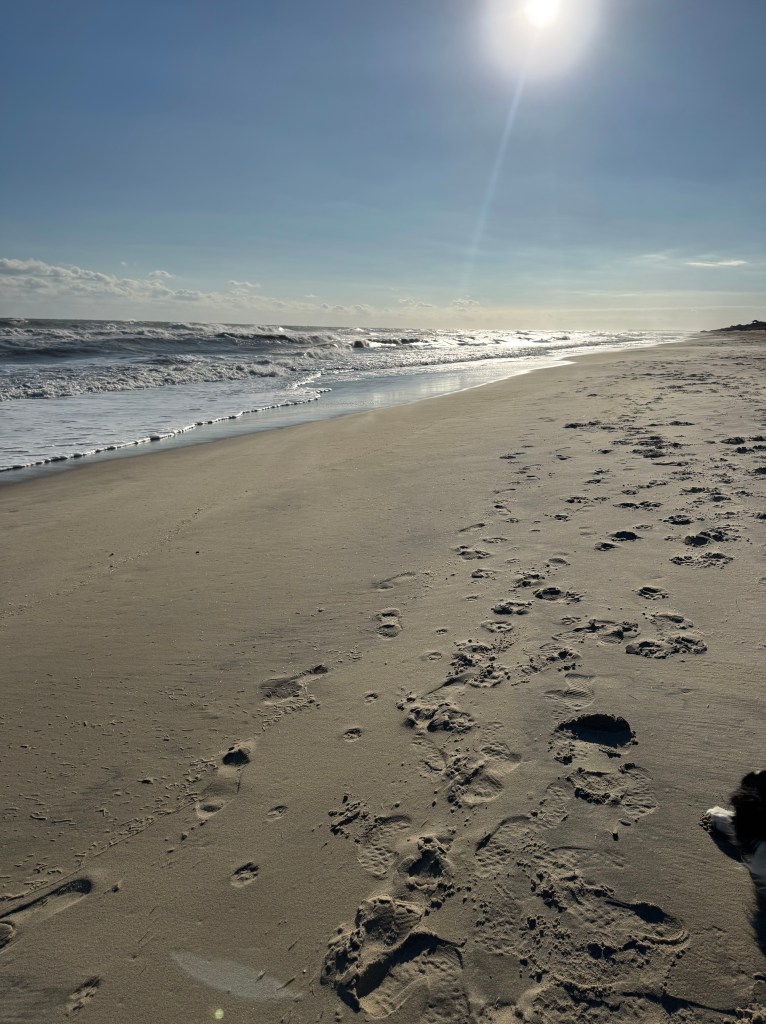


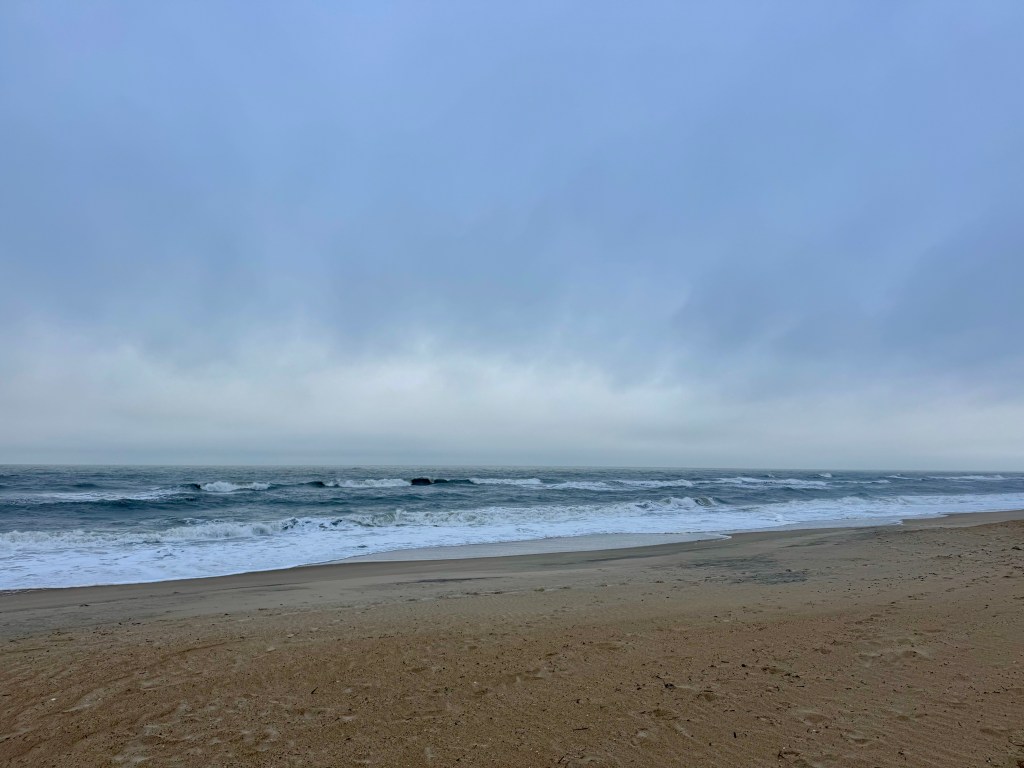
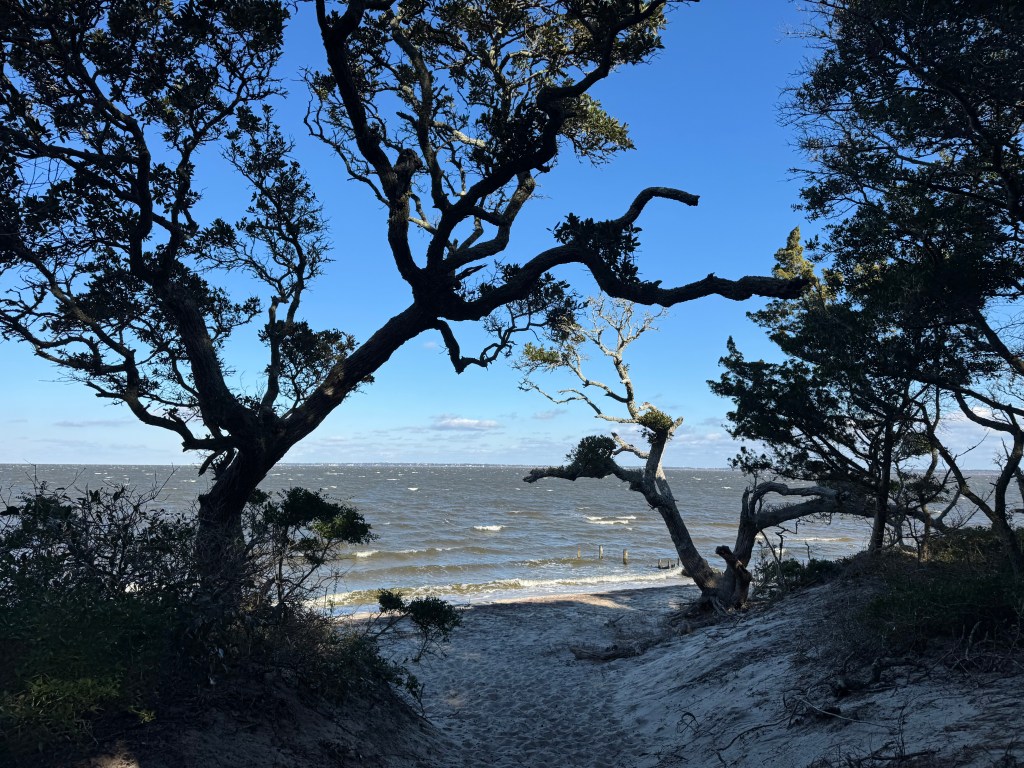

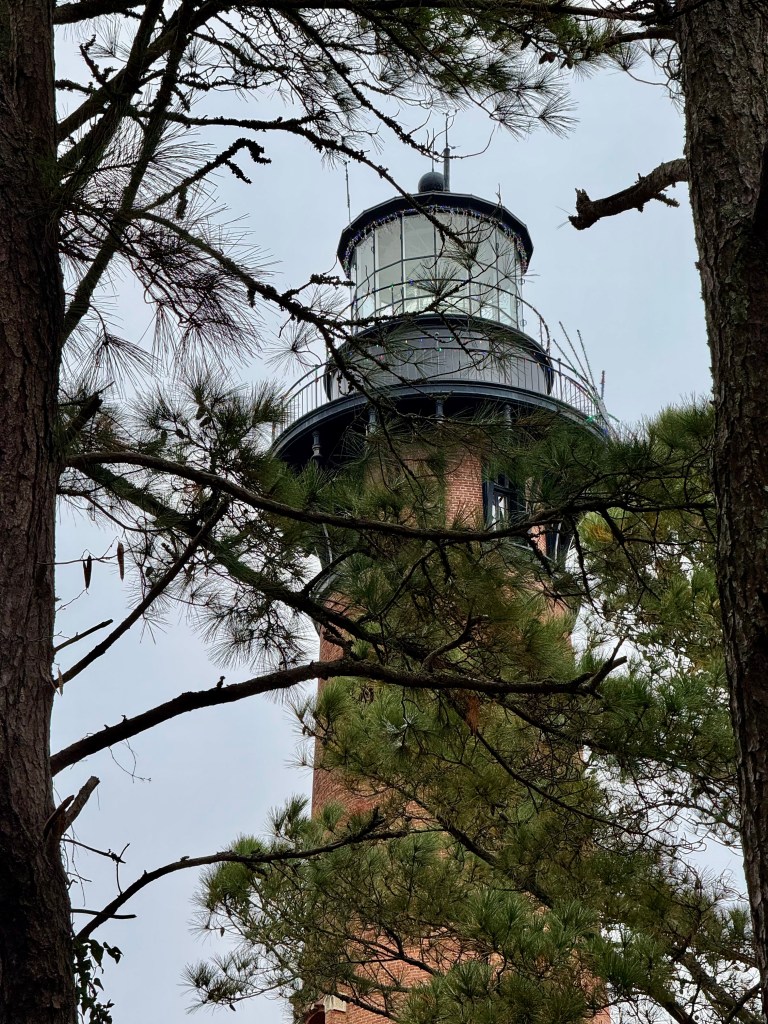


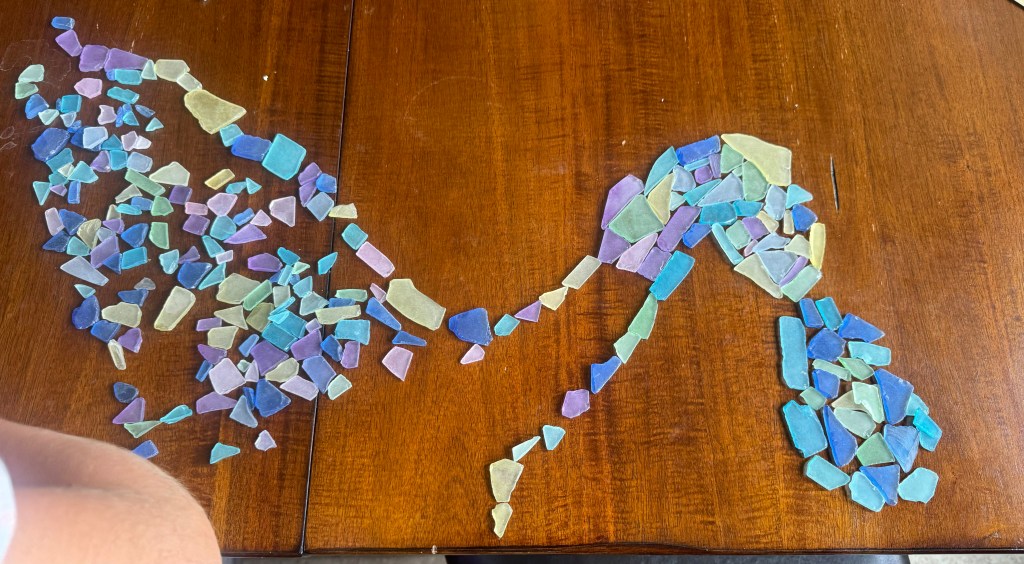




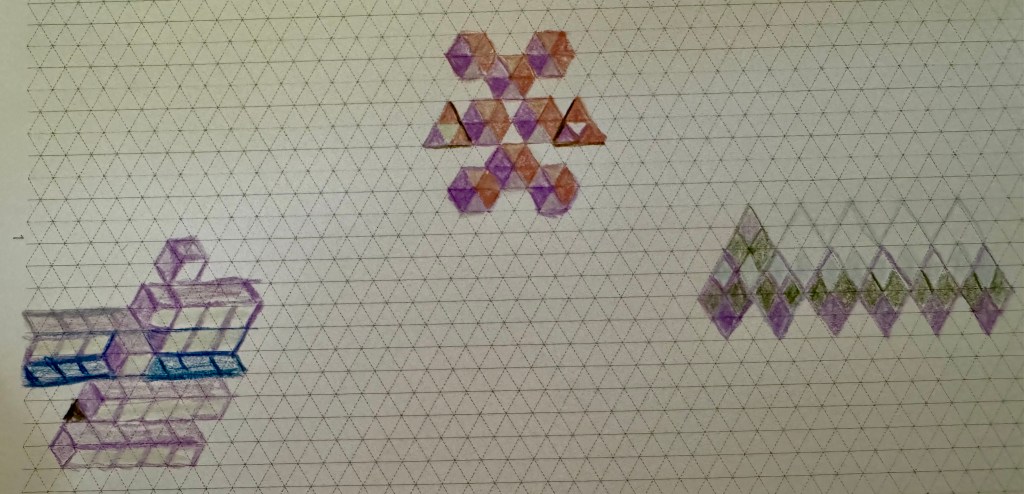


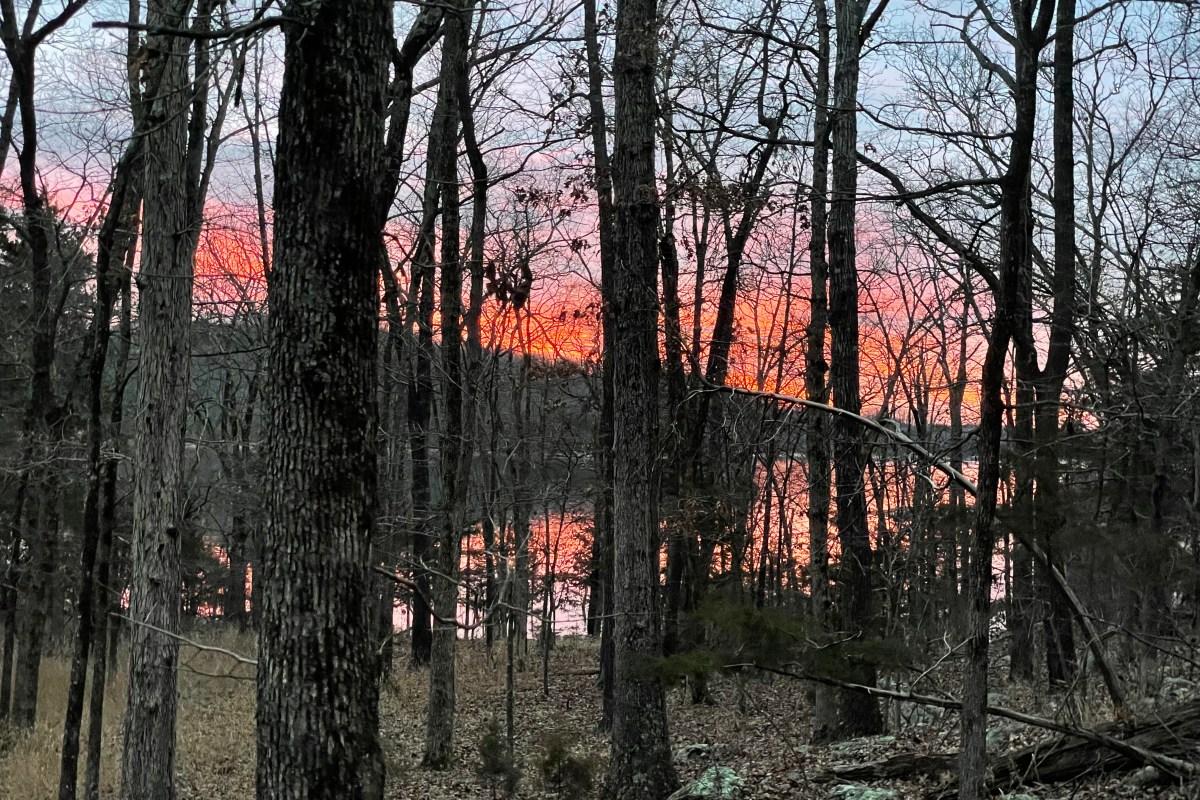


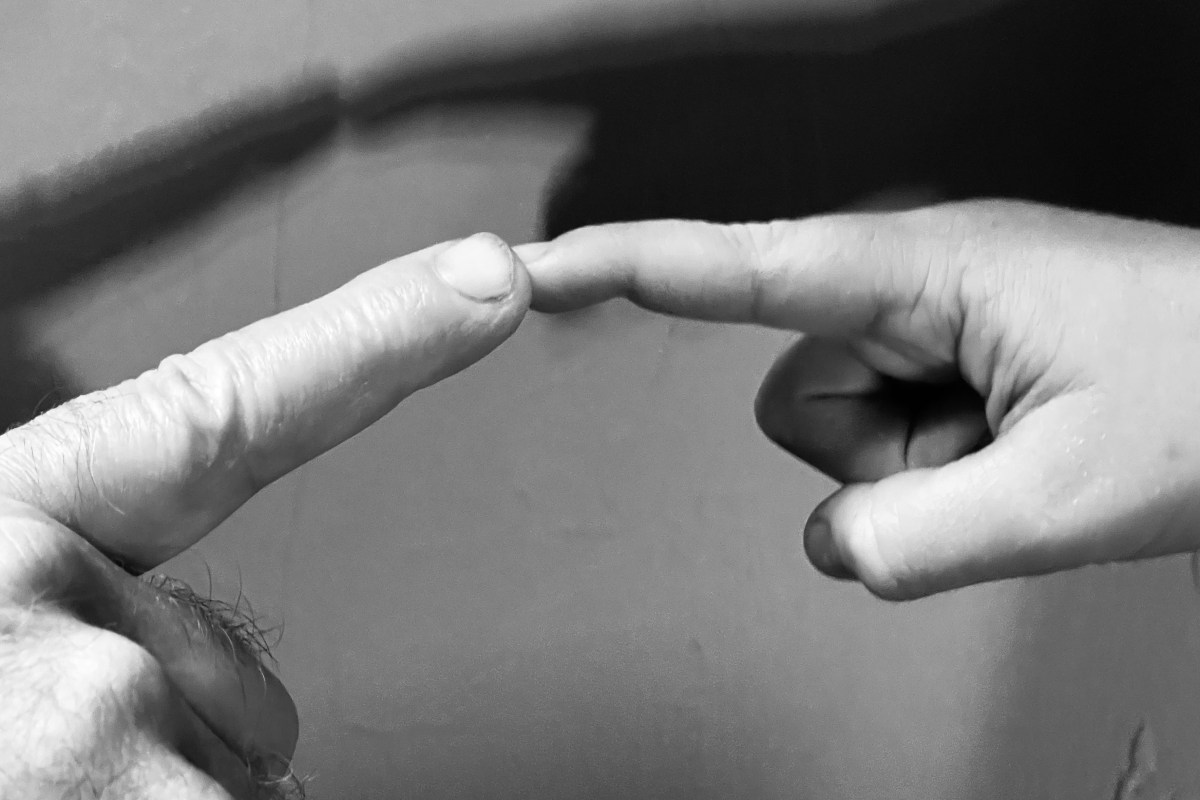
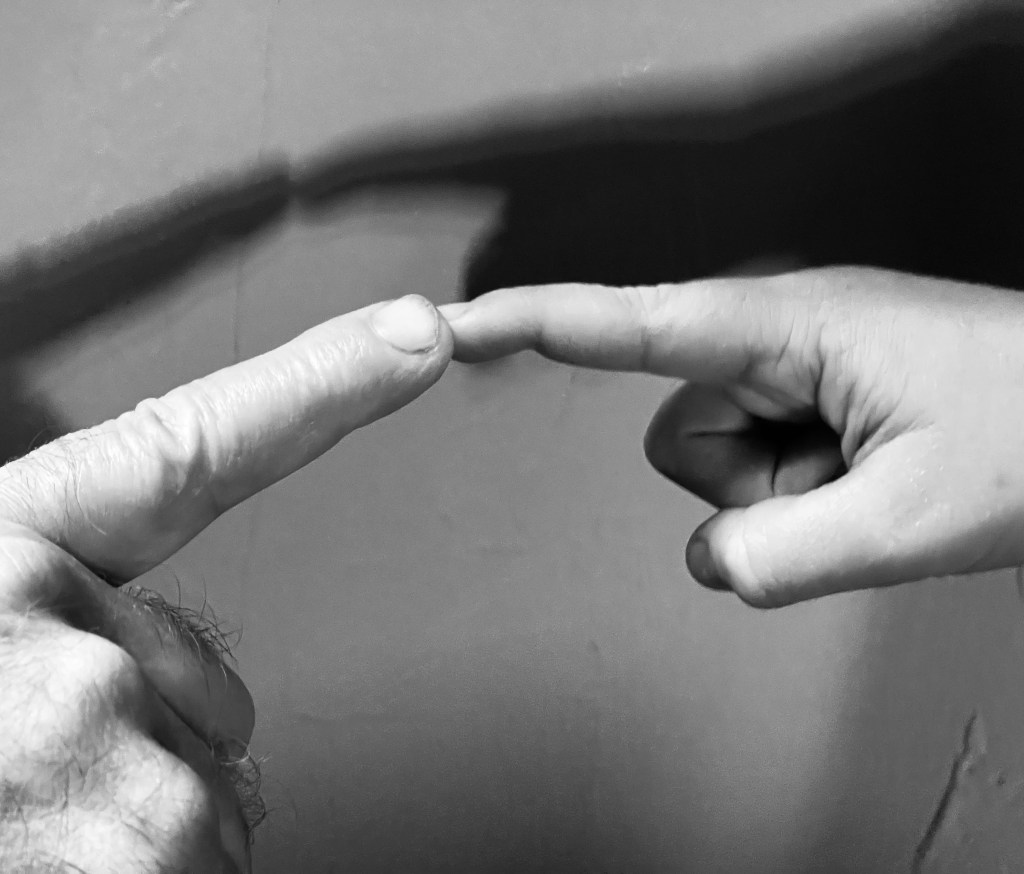


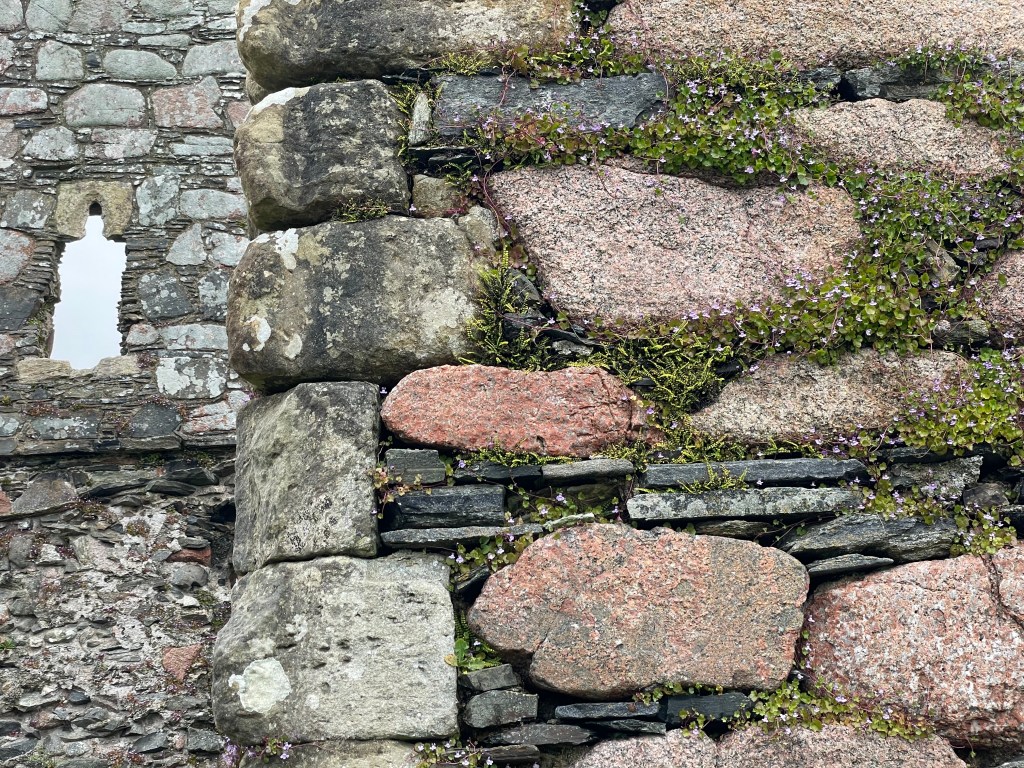
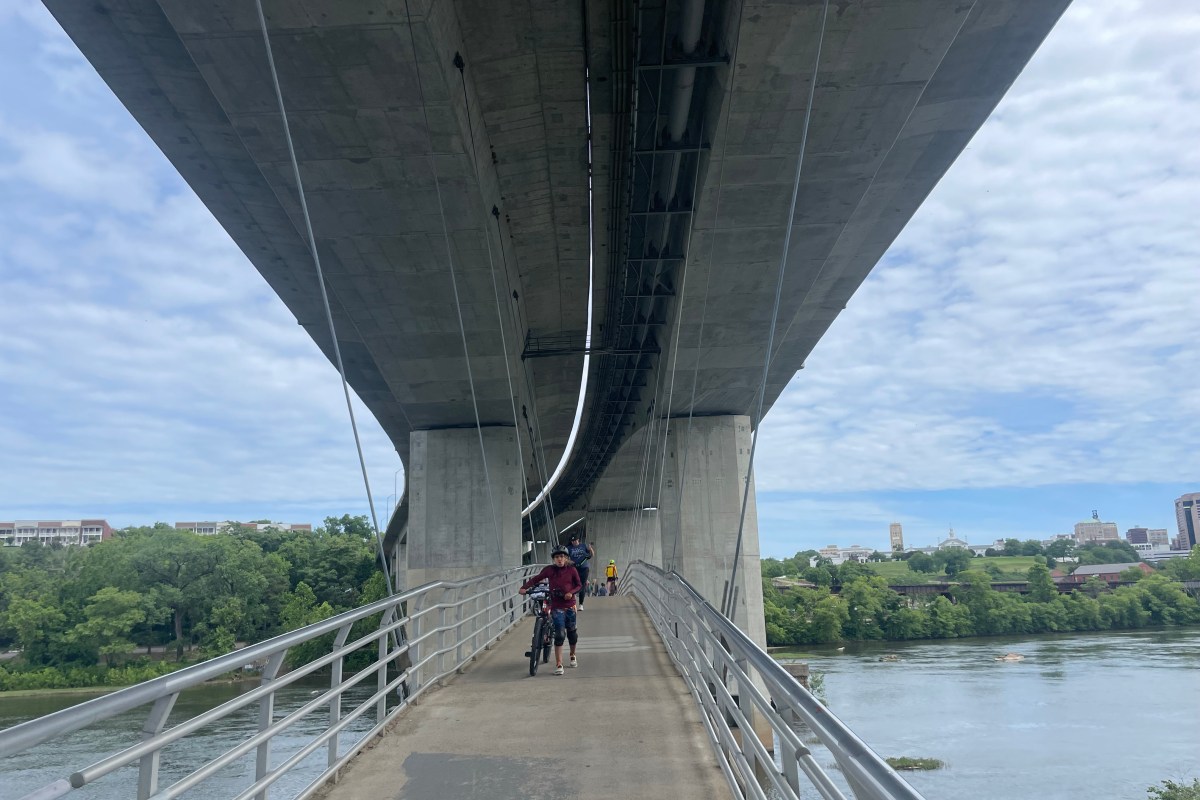



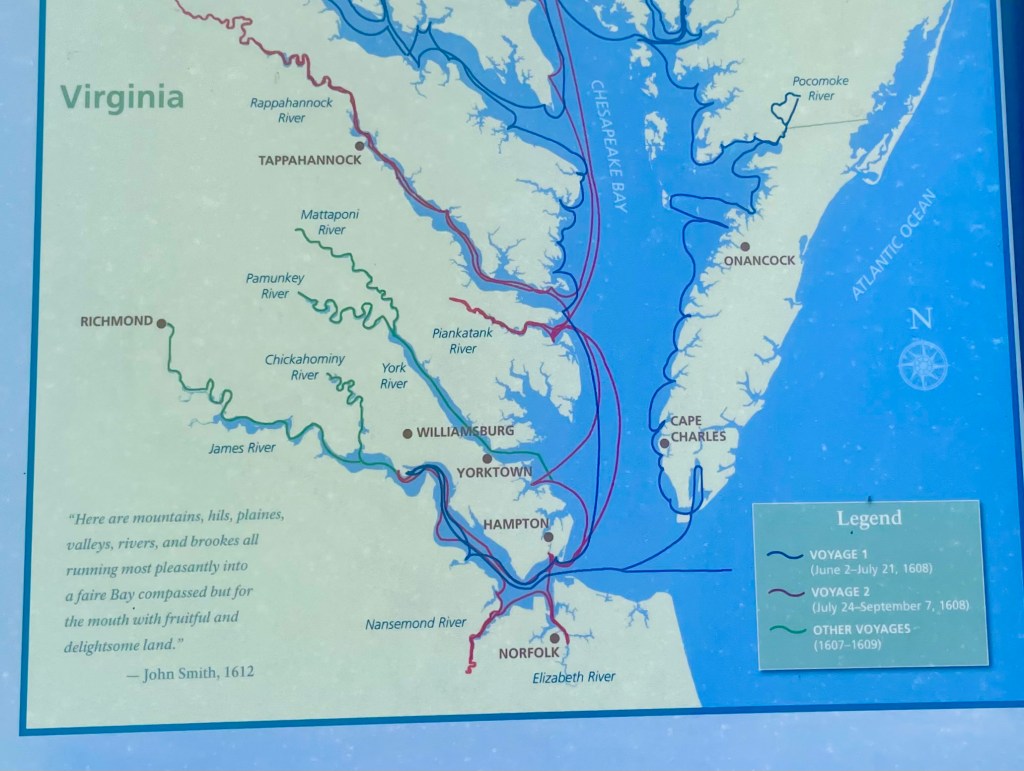





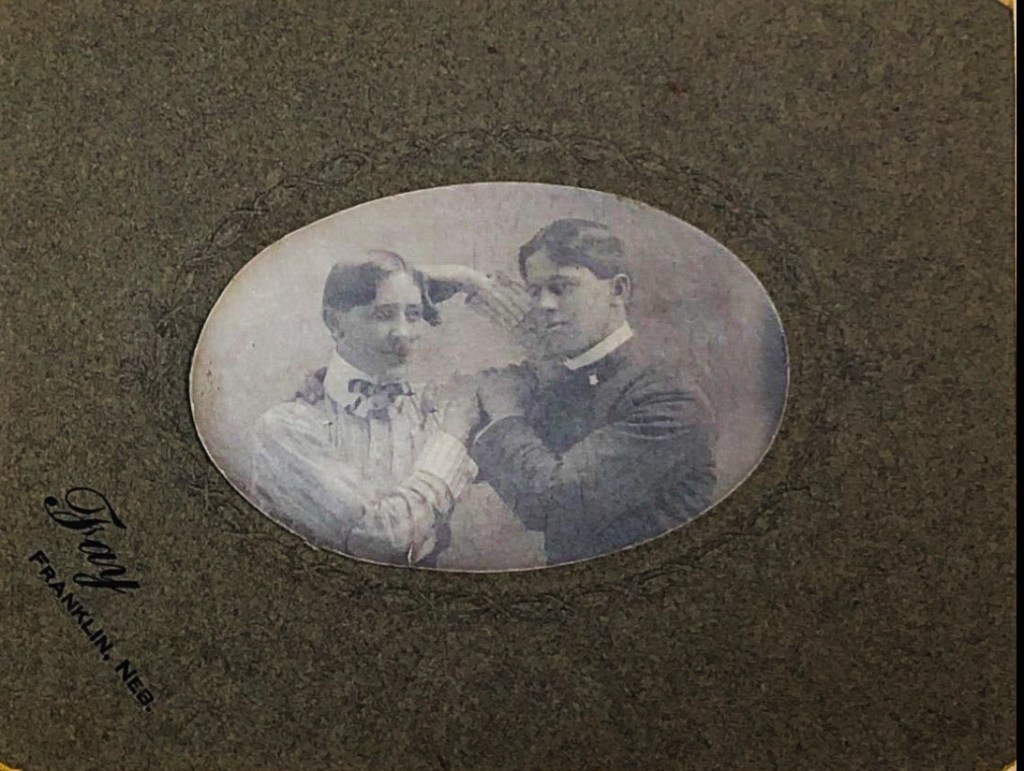


 Ancestors Worthy the Note