4 July 2026.
Seeking the Common Heroes
I am watching the tall ships sail into the New York Harbor. No, I am not there in person… sadly, for that would be spectacular to behold. Actually, I also am envious of those fortunate enough to sail aboard the vessels, which would be even more breathtaking.
The flotilla and waterways around New York remind us of the origins of the United States founding. We can consider the waterways, the geography of various locations throughout North America, and how those places factored in settlement and warfare. We think of the many nations seeking exploration of North America and how those nations, even early on, contributed to our culture, food, and people. We continue to wrestle with the various reasons that America was sought, for riches, and national sovereignty… and the individuals famous and ordinary who participated at every level. We also continue to try to understand the impact upon those vast cultures that existed in America prior to the arrival of the Europeans, and the continued impact upon the environment and cultures by European arrival and westward expansion.
Regardless of the particulars of European arrival and its impact, we can pause to think about the immensity of it all, the wonder, and the remarkable achievements of humans to traverse vast expanses of water. We can wonder of each human’s ability to survive both as individuals, but particularly as community, working together to accomplish the impossible.
Each of us is a descendant of people who were so brave. Regardless of where you are reading this, your location, or your citizenship across the world, it is true that we can consider the amazing fact that each of us exists, given the hardships and obstacles overcome by our ancestors.
Really, I want to zoom in upon genealogy for those of us who seek to understand the complexity of our ancestry.
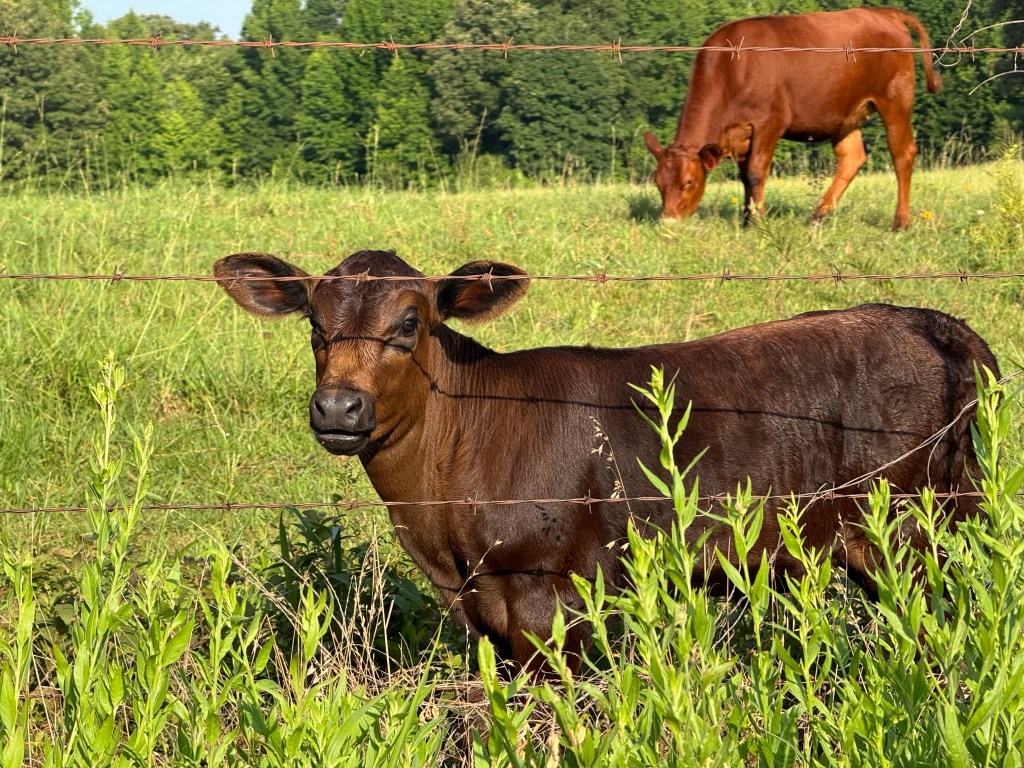
I have been thinking of a problem I observed as a child when my parents were working on genealogical research. I am grateful that they were careful researchers who sought the truth. They wanted evidence of lineage. Yes, they collected family stories and mythology, but they mostly noted those stories and looked for records that supported the stories, and especially those that broke through the stories to the reality.
The problem they ran into were threefold. Many people wanted to descend from someone famous, especially royalty or nobility. These notoriety-seekers’ research began and ended by latching onto anything to *prove* their desired lineage outcome. They very often were single-minded in their genealogy research, focused upon one lineage out of the literal hundreds (and more) that they could have picked; then, once they had “found” their the immigrant ancestor, and especially if it linked back to royalty/nobility, they would crow that their genealogical research was complete. The problem was how much these folks’ short-sightedness shut down any questions, further research, or even reasonable conversation.
One can see this desire for a famous connection even in some of the older documents and books written in the 1960’s and before, with exceedingly high-minded verbiage in describing lineages. Too many seem to be dripping in effusive pompousness with contempt for others not so fortunate to be so-descended from the noble or famous ancestor in question. Then that writer’s book often has become an accepted reference cited by other researchers without verifying original sources, making it even harder for a sincere researcher to locate the truth.
There are a large number of people who are not interested in genealogy. I do not fault that.
What I do have a problem with is a weakness that, I would assume, is common to each of us. How we feel about ourselves is bolstered by thoughts that we may be descended from someone famous or grand. I can admit to the fault, and I seek to overcome it.
An honest, research and detective-based genealogical practice has led me to really think about each ancestor and the story behind each one. Overlaying the research with understanding of the history, culture, and geography of each story adds so much texture. I can honestly say that this sort of research adds so much understanding to each individual’s life and proves that, regardless of their story, they are every bit as interesting and worthy as any royal or noble. And, by the way, when the royal/noble ancestor is truly studied, their ordinariness becomes evident. Being descended from a famous person is not necessarily a feather in the cap.
Furthermore, I would like to say that some of the problems of the United States has come, in large part, from a desire to recreate that from which we came, that of a feudal society in which people are born to their status and seek to maintain it.
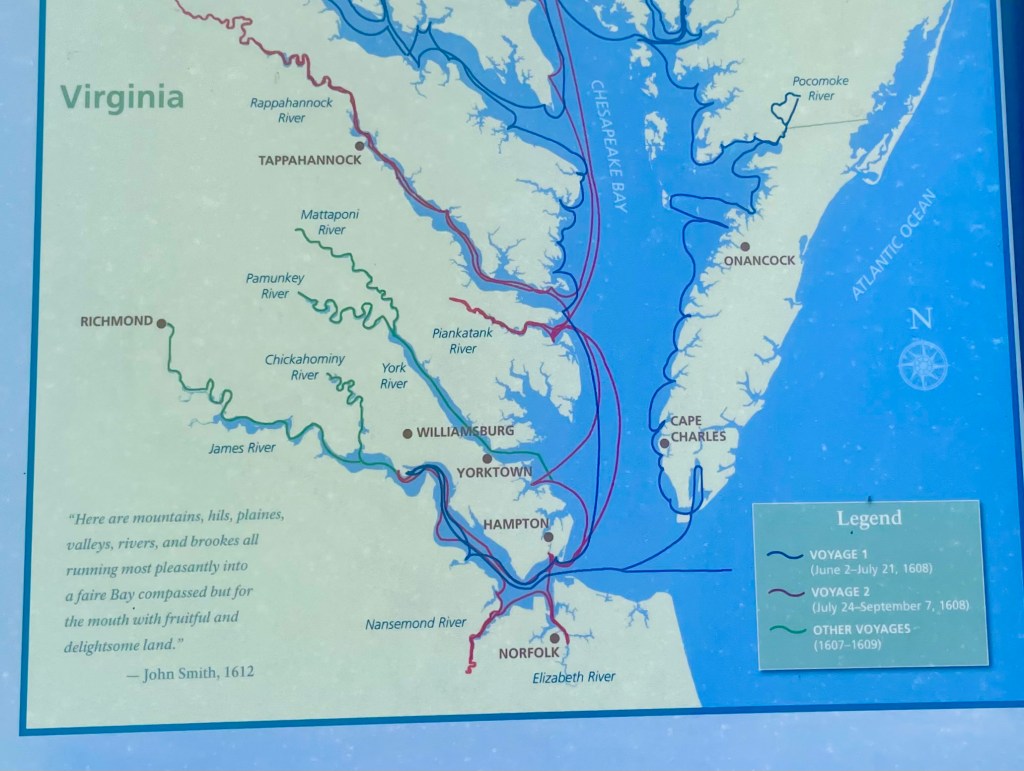
I can see perhaps the deceiving logic… In the original settling of Virginia— the shirt version— the idea was to establish a mechanism and society to further the royal crown of England. The economy and culture, including the Anglican religion, were transplanted to America, and those who were loyal expected that they would achieve financial and social stability. This was true for all who arrived, regardless of their original social and economic station in life. Those participating in society even allowed slavery in order to achieve their goals. What a travesty. What a deceit. What a lost opportunity. We continue to live with the impact these 400 plus years later.
And one of the things we live with, and I speak from the genealogical perspective of those who those who had power or acquired power, is a (probably natural) tendency to want to think that our ancestors had it all correct, that they were justified. Including the fact that even currently we may each continue to bear the desire to descend from royalty or grand-ness as something that makes us feel better, and perhaps whitewashes any second thoughts about certain choices made in our national history, individually and nationally. With the Declaration of Independence and successful establishment of the United States of America, we also developed our United Sates version of royalty… Washingtons, Adams, Mayflower descendants, all the presidents and first ladies, and I am sure you can add more.
A Pivot of Perspective
My personal perspective of genealogy is different from some because all of my lines, as far as I now know, were in America as early as the mid-17th to the late 18th century. A competing perspective came into focus a couple of years ago when I was sharing with a friend I will call Max my recent research findings and processes, referencing Jamestown-era immigration in Colonial Virginia. Max was truly amazed and shocked, stating, wow, that is a long, long time ago! I swallowed hard and realized his reality, as he explained his family’s path. I knew his uncle whom I had met when I was a child and he was a collegiate from Thailand, along with a large number of Thai students of my parents. These students became friends of my parents, and many of them stayed in America and had their families and successful careers. Only now did I really understand that the “Thai” student my parents befriended had certainly arrived from Thailand, but his family had emigrated there from China. There was a long, long generational history of emigration and transplantation, with necessity to make new homes in various cultures and countries along the way.
With such a degree of multi-generational displacement, how would one trace family history? One side of Max’s family was Thai, and he had more known ancestry on that side of his family, but apparently not by much. My understanding only is that the frequency and commonality of displacement in the region of Southeast Asian nations has to be taken into consideration in the history of the current and past residents.
What I learned from Max and others with similar histories is that one’s self-worth is not dependent upon establishing a fine ancestor or lineage.
Moving Forward
My wish for each of you is that for the years ahead you seek–
- To be proud of the ideals expressed in the Declaration of Independence 4 July, 1776
- To appreciate all the people in our history, including our ancestors, who worked toward the fulfillment of the Declaration to include all residents of our country. We must believe that fulfillment of the Declaration still is within our grasp.
- To seek the truth about our ancestors… their stories are worth holding up, even stories that are unpleasant or upsetting.
- Avoid the tendency to feel superior to others due to lineage. The superiority of wealth or nobility is a mirage meant to enslave us.
- We all have ancestors who are heroes, even if they are not famous. I would argue that 99% of your ancestors are heroes and should be considered so. Seriously! Remembering these little-known heroes is worthy and honorable to do. It holds up stories of bravery and resilience that we can celebrate!
- We all have ancestors who made dismal choices. Understanding how they came to do so is enlightening. Likely their past had some bearing upon our past and present, but we are not defined by them. We are resilient and can seek healing for ourselves and others impacted.
- We can all learn from the mistakes of the past. It helps us to understand the present, individually, within a family, with in a community and nation.
- To understand is to build bridges to reconciliation, with each other, and with ourselves.
- Let none of us be kings. That does not work, nor will it ever.
We are in this together. We always have been, and we always will be.
Happy 4th!
William