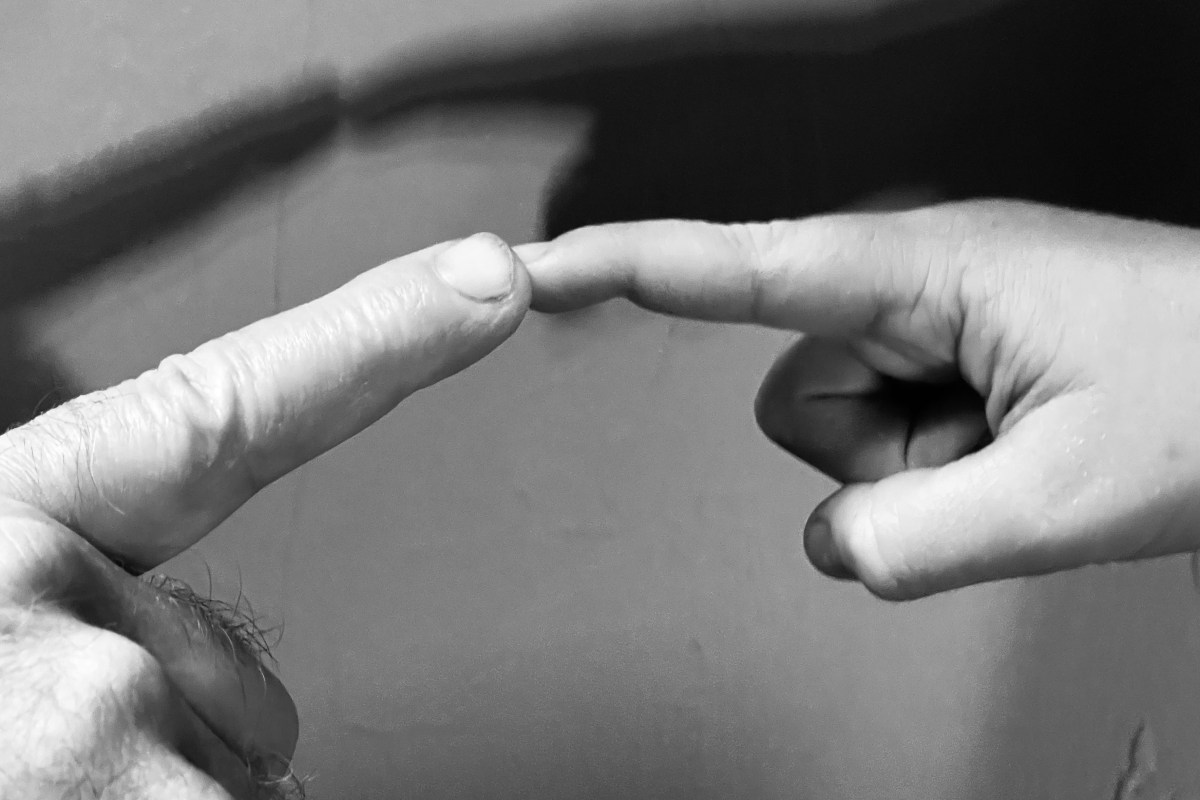

So far, we looked at estrangement from several angles. We looked at it from the perspective of one who needs to estrange from another; from that of one who experiences that someone dear to them has pulled away; the particular difficulty when the reasons for estrangement are partially or totally unclear; and the confusion of being in-the-middle between estranged parties.
Today let’s look at another factor that may be invisible to any or all of the estranged parties. That factor is a trauma that occurred in one or both families of the parties one or more generations prior to their birth. These traumatic events may be referred to generational, inter-generational, trans-generational, or multi-generational trauma, expressing that a significant trauma experienced in one generation can impact the lives of those in succeeding generations.
As you read today’s blog entry, be aware that the topic of multi-generational trauma in our estrangement discussion was planned from the outset of the series as a result of genealogical findings and experiences. As the horrors of current and recent events have unfolded, there are too many examples of the trauma close at hand. While these current traumas are direct examples for us to consider, they are not the focus of our discussion. The emphasis here is upon the need to be aware of the potential for the presence of multi-generational trauma within any estrangement, even if it is invisible or not consciously known by any or all of the parties involved.
While this post is not meant to be an authoritative, academic investigation of the phenomenon of multi-generational trauma, it is worthwhile to look at the concept; ways it can be viewed; how it can apply to us and those we love; and what it can mean for our future, outcomes, and happiness.
On the one hand, that a trauma will affect future generations of offspring can seem very intuitive. If a war breaks out and if a family’s safety is threatened, they evacuate, experience bloodshed, barely escape, and find safe harbor in another country, never to see their homeland again, that is traumatic. It is traumatic to each person who experienced the trauma, whether adults or children. If there is physical harm to any of the parties and/or if there is significant loss of financial stability, there is impact upon each family member. Are parents available to care for the children; are the children able to get their education; are any family members further victimized due to their tenuous situation? Any of these, or other, consequences of the trauma create impact in addition to the original, first trauma.
Even children who are born after this traumatic event may suffer from the impacts of the trauma. They may be born into poverty; parents may be focused upon providing for physical needs of the family and unable to attend to them otherwise. There may well be post traumatic stress disorder (PTSD) impacting the mood and availability of the adults, with possible additional secondary substance abuse or other addiction impacting the individual and family system.
These issues alone, situational and emotional, can lead to a domino effect in successive generations for risk for disease, educational opportunity, and ability to procure employment.
Even if we just look at emotional issues with a bit of a magnifying glass– what impact would the trauma have upon a surviving parent’s emotional health and ability to parent secure, healthy children? At risk for the children are attachment, trust, security, appropriate emotional expression, risk for fear of abandonment, the ability to maintain stable relationships across time, and skills in healthy conflict resolution. Problems in any of these important elements of human development can contribute to potential for relationship problems, future ability to parent, and risk for estrangement later in life.
Potential Cellular Changes?
Emerging science, as yet not fully understood, reveals that trauma can impact how our DNA is carried in our bodies and transmitted to our offspring. Yes, really. The concept is called epigenetics, and the basic premise is that when one experiences significant trauma, it can impact one’s biology in a way that impacts one’s genes’ ability to be expressed or to function as intended.
There is a fair amount of evidence that Trauma (and the capital T is intentional, to differentiate from trauma with a small t*) impacts our biology. When we are under siege, our body is in full-on alert, and all systems are activated to fight or flee for our lives. That is how we have survived thousands of generations on earth, rampant with fires, floods, and wild animals. In addition to natural dangers, humans have succeeded in finding all kinds of horrors to which we can expose each other. Some horrors are unintentional by well-meaning but misdirected people. There are children who were reared in eras with peculiar “how to raise your child” directives that were meant to be cutting-edge instructions for parents to raise the perfect children. Of course, wars and unspeakable cruelty of all sorts by broken, power-hungry, and evil people and systems wreak horrible Trauma, whether sudden and brief or prolonged.
Please know that Trauma or trauma, while impactful, does not have to be experienced by anyone as necessarily something that individuals cannot overcome. During an ongoing Trauma or trauma, it can help if one can have periods, even brief ones, to withdraw to a place of calm, physically or mentally, to bring down pulse and respiratory rate. Additionally, it helps during, or afterward, to express emotions through talk, writing, any art form and to have connection with others. When people can be in a safe place with appropriate support, there are treatments and modalities that can be very impactful in supporting an individual’s ability to survive, heal, and thrive despite the trauma. That is not to minimize the trauma, however, which does impact one’s life and turns to a different direction, one way or another.

Sources of Trauma and Ability to Identify
For our purposes, understanding our relationships with others, especially through the eyes of a genealogist, it is important to know that trauma can be an invisible element of broken connections. Even for traumas that are historically documented in newspapers or books, the trauma may not be known to us because the family did not talk about it. Other traumas are not to be found in newspaper articles or books, because they were private occurrences, likely borne as secrets.
Generational traumas against ethnic groups are significant issues indeed. While there are commonalities among individuals experiencing ethnic targeting or ethnic cleansing, there also are specific impacts informed by the specific story and circumstances of the impacted ethnic group, whether First Americans, African American enslaved, Jewish, Ukrainian, Palestinian, or other groups. The associated situations, dangers, and threats would impact each family.
Trauma can be visible as an event known to have occurred, such as harm or displacement during a war; the physical impact of a natural disaster such as a major tornado, hurricane, flood, or wildfire; or accident such as a car, train, or airplane crash or urban fire.
The source of trauma also can be invisible to outsiders. Invisible traumas include displacement from war or conflict accompanied by avoidance of affiliation with one’s ethnic group–passing as a member of another ethnic group in order to survive; bearing the burden of a secret assault; carrying an untimely or unwanted pregnancy; and secretly experiencing violence or family substance abuse at home. In past eras, having a family member with significant mental illness was kept secret.
Individual Differences in Experiencing Trauma
It is important to realize that even with the SAME trauma, not all people, regardless of whether they are children or adults, will experience, react, or process the trauma in the same way.
Repression and Denial. To not recall a particularly horrible Trauma is an unconscious defense mechanism. It is not unusual to find that someone has repressed an abusive or traumatic assault. Additionally, not talking about an event, even if they do recall it, may be required for an individual to function, due to the pain/fear/shame associated with the event.
Shame and Guilt. While children are particularly prone to internalizing traumas and incorrectly seeing themselves as responsible for negative outcomes, adults certainly also engage in self-blame. When there is additional change in status or power, victimization by abusers, or denial of one’s self or culture, there is additional shame and guilt likely to be present in survivors of the trauma.
Fear for Safety. Sometimes the original trauma is problematic for the individual because there is fear for the safety of themselves and/or their family. The danger may be from the perpetrator, someone else who may punish the victim should it be discovered, or family conflict or violence if the situation were to be discovered.
Loss of Family or *Institutional* Knowledge. Sometimes the victim has died, leaving a young child who either does not know or does not understand the event, so the story is not passed down. Even when the parent survives, physical or emotional conditions can impact that parent’s ability or desire to communicate, not only the occurrence of the trauma, but even the broader picture of the family’s story/culture/history.

Why Does Generational Trauma Matter in Estrangement?
In the course of doing our genealogy, it is inevitable that we will run across an ancestor, either ours and/or an ancestor of a cousin, who has behaved badly. How badly the specific ancestor behaved can be across a spectrum, with the worst extreme being horrible, injurious behavior or unexplained, devastating abandonment. How do we understand this person and his/her impact?
In no way do we wish to condone or excuse the bad behavior, but as researchers, we are looking for the truth and to understand the story in the broadest, most informed perspective possible. Someone who has acted this badly may well be someone who experienced an abuse or trauma by someone, somewhere. If we keep that fact in mind as we do our research, we may find bigger pieces to the puzzle that put the individual’s behavior in context and expand our understanding of their family, community, or micro culture. Interviewing descendants; newspaper searches; court records; and church records can be sources of this information, along with DNA evidence.
In my experience, it is not at all uncommon to see an impact of the problematic or troubled ancestor, whether a more recent kin, such as parent or grandparent, or a more distant ancestor, upon the lives or behavior of the descendants. Examples include poor self-esteem; over-controlling or limited involvement in parenting; emotional dysregulation; difficulties with anxiety and depression; a tendency to cut others off (estrangement??) as an alternative to the hard work of conflict resolution; over-focus upon somatic symptoms as unconscious expression of anxiety or depression; excessive and injurious minimization/avoidance/humor/deflection to avoid connection, intimacy, or communication. Likely, all of these response styles are unconscious on the part of the bad actor. NOTE: These characteristics or behaviors DO NOT prove existence of trauma. I only intend to encourage you to show grace in your response to family members who may have these symptoms or tendencies and realize that it is POSSIBLE the the symptoms may have a more complicated history or origin, reaching back generations, than even they know.

A Measure of Humility or
You Think You Already Know, but Do You Really?
Wait, wait– what if the current estrangement is with a sibling, a cousin, an offspring, or someone we “know.” We share their history, their DNA, and to our knowledge there is no generational trauma… therefore, our loved one cannot be suffering from generational trauma. Otherwise, we would know it. Right?
NO. You cannot make that blanket assumption. Here are reasons you cannot assume that you know.
Even if you share DNA ancestors, you did not inherit identical autosomal DNA, even with full siblings. In that case, if there were epigenetic DNA changes as a consequence of trauma, each of you may have a different DNA heritage.
You inherit different things from each ancestor, which also explains different eye and hair color, facial features, and personality. And those inherited characteristics also make each person’s experience unique.
Each person’s personality responds differently to the same parenting.
Even siblings have different histories that impact them, including birth order; how each family adult interacts with them; educational exposures; peer exposures.
AND you may not know your full history yet. Imagine the shock of being 50 years old before discovering that your grandparent is an adult child of an alcoholic, discovered when the grandparent and their siblings start talking freely about their childhood, in unfiltered discussion in your presence. Suddenly, with this new information, the family dynamics make sense in this new light!
Or suppose new DNA findings show a different ethnicity from what you thought you were. The new finding can put a familiar family story into a new light or context and point to generational trauma and its impact across several generations that you now can plot? One example is former U.N. Ambassador Madeline Albright who, at 60 years of age, discovered her Jewish and holocaust ancestry and family history when it was printed in an article about her in 1997!
Even increased insights into yourself as you mature and understand the world better can help you piece together family histories, personalities, and tendencies that show family complications and complexities you never realized existed. There is a benefit to maturity.
We have so many ancestors… we will never know all of our relevant histories and what has impacted our personalities and lives. So, we are naive if we think we know it all.
In Conclusion
We must understand that where there has been an estrangement, there may also be a significant generational trauma history. That trauma, whether in our ancestry; in the ancestry or recent history of the other person in our current, personal estrangement; or in both can unconsciously impact perspectives, reactions, and behaviors in significant ways. Even understanding the POTENTIAL for the existence of a recent or generational trauma can create the beginnings of a thaw in the the relationship and openings for renewed connection.
William Williams
* Trauma with a capital T typically denotes a significant, recognizable event in which one perceives risk to life, while trauma with a small t represents a more sustained, possibly less visible, but no less impactful event or series of events, such as ongoing emotional abuse.”* Trauma with a capital T typically denotes a significant, recognizable event in which one perceives risk to life, while trauma with a small t represents a more sustained, possibly less visible, but no less impactful event or series of events, such as ongoing emotional abuse.
Resources
Multiple Resources for Stress and Trauma, American Psychological Association, apa.org
DeAngelis, Tori, “War’s Enduring Legacy: How Does Trauma Haunt Future Generations?” American Psychological Association, Oct 12, 2023, https://www.apa.org/topics/trauma/trauma-survivors-generations
Zimmerman, Rachel, “How Does Trauma Spill From One Generation to the Next?” The Washington Post, June 12, 2023, https://www.washingtonpost.com/wellness/2023/06/12/generational-trauma-passed-healing/
 Ancestors Worthy the Note