
People Are Key
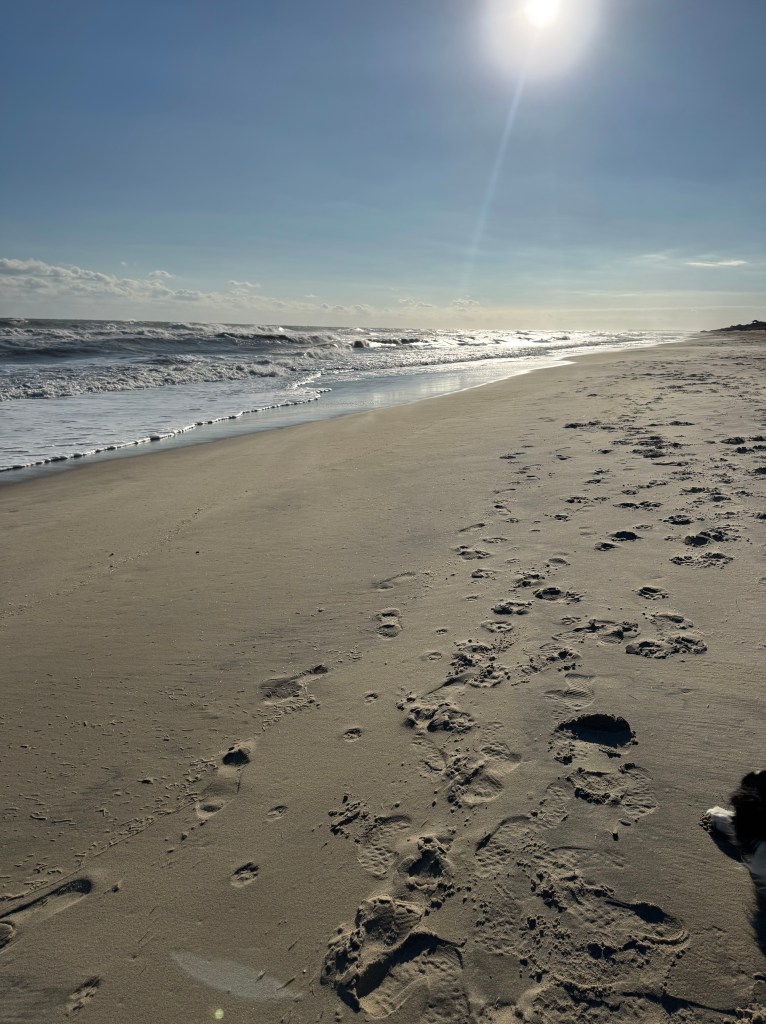
Our adventure was limited by some key factors. It is low tourist season, and many sites are closed for the season, especially the lighthouses. Several museums and the Cape Hatteras Lighthouse are closed for renovation. It is holiday season, adding to closures and changed schedules. It is winter, so cold and windy on the outer banks of North Carolina, which led us to hang indoors or not venture so far away from shelter, when normally we might have taken longer hikes.
What we did experience, wherever we went, was to engage with people and encourage them to share what they knew of the locations and history of the outer banks. Some of our favorite locations for finding information included the following:
- Fort Raleigh National Historic Site, Roanoke Island
- Poor Richard’s (Poor Rudolph’s) Sandwich Shop and Pub, Manteo
- Wright Brothers National Memorial
- Outer Banks Visitors Bureau, Kitty Hawk, NC
- Currituck Banks Maritime Forest Trail Lookout
- Corolla Wild Horse Fund, Corolla, NC
- The Kind Cup coffee shop, Corolla, NC
- The Island Bookstore, Corolla, NC
- Absolutely Outer Banks, Kitty Hawk, NC
- Knitting Addiction, Kitty Hawk, NC

We enjoyed speaking with park rangers, a retired wildlife management person volunteering at the Currituck Banks Forest Trail, and residents who shared their stories and information. We found maps, books, encouragement, and a shared love of the location and its multiple layers of history. We continued to find very few people who had knowledge of the early sea inlets of the outer banks. One resident believes that the original Port Currituck is at the location of the current Currituck Lighthouse, which is in the old village of Corolla, NC on the north end of the outer banks, at the current end of the road north, where the Corolla wild horses now reside and are protected.

Geographical Take-Aways
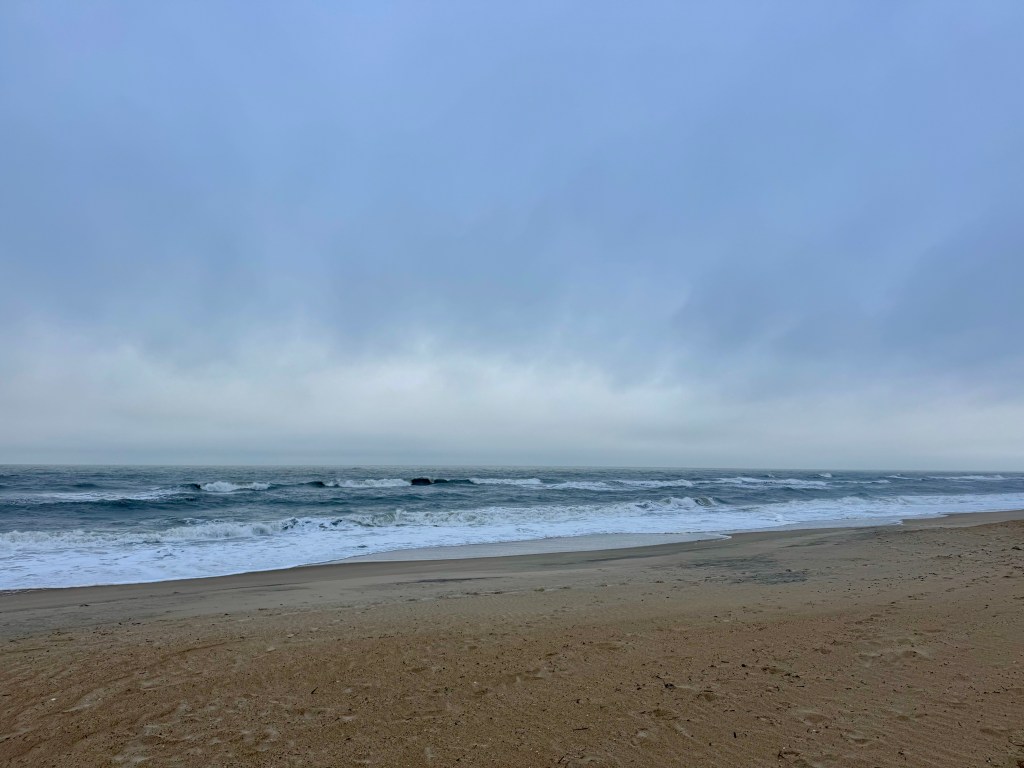
In my mind, as we planned the trip, I thought we might venture to more locations of interest… Elizabeth City, Currituck, Cape Hatteras, or even Northampton County or the Great Dismal Swamp. Spending more time in the car just sounded like NO fun, so those excursions will have to wait until another day. All of this continues to underscore how hard travel is in this part of the country. Everything is so far away, and so dependent upon bridges, which did not exist until 1928. Understanding how people traveled from this location to West Tennessee in the 1830s is still a topic I am keen to understand, and I look forward to discussing the topic with researchers who have expertise in early migratory patterns of eastern NC.
Here are new-to-me ideas that I am considering:
- The height of dunes
- That the Carolina outer banks dunes build up from southeastern winds and are taken away by northeastern winds
- The consistent prevailing winds
- That other than Native Americans, there were very few people on the outer banks until after WWII
- The brackishness of the Albemarle Sound water shifting with the presence of sea inlets vs. their absence, which impacts type of fish and fowl present for hunting
- Jobs for people shifting with the season, depending upon temperature and weather conditions impacting available fish/clams, and this would have been true also for indigenous peoples
- The many rivers emptying into the sound at various points underscoring the relative ease in early history for waterway travel vs overland travel, especially prior to bridge construction
Successful Adventure
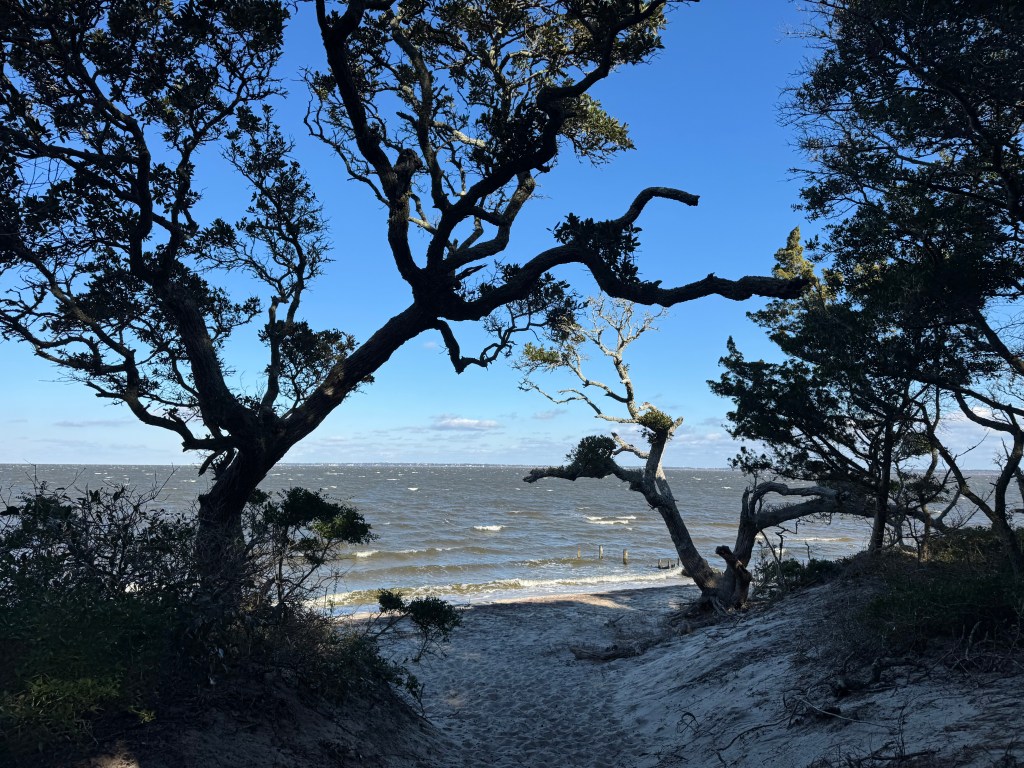
I can say, once again, that travel to see an location in-person has advantages over simply reading about the area or doing online research. So far, there is no huge revelation or break-through to report this trip. It would be unrealistic to expect such miracles for every trip. Yet, it is easier to understand what I read and research about the location and its history, now that I have visited. I can contextualize the information I acquire. It also may be easier for me to pose questions and theories that are sensible, and to locate the researchers/information I need to further my understanding and acquisition of data.
The Central to Northern Outer Banks of North Carolina (OBX) during winter months was a fun trip and worth the effort.
May all your 2025 adventures be all you hope, for connection, experience, enjoyment, and fulfillment!
 Ancestors Worthy the Note