Genealogical Geography Adventure 3/3

table and chair in turquoise colors overlooking Roanoke Island beyond the water
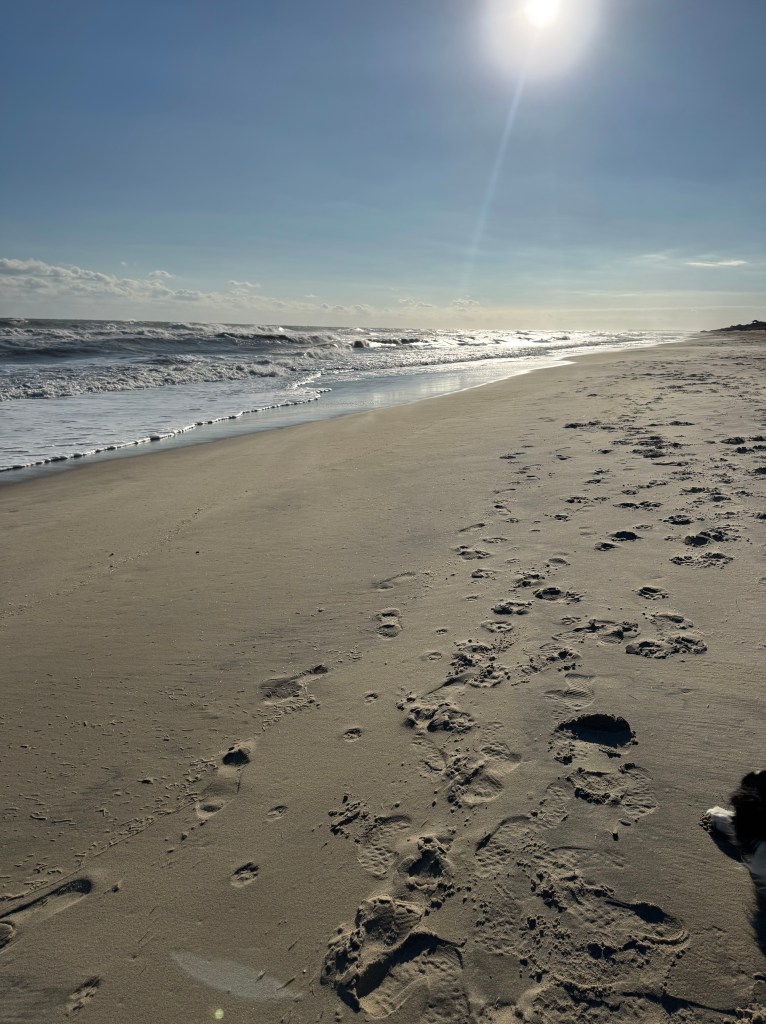
Outer Banks North Carolina Beach looking south toward pier, sun shining on ocean
Morning beach walk, Nags Head, North Carolina

People Are Key

Our adventure was limited by some key factors. It is low tourist season, and many sites are closed for the season, especially the lighthouses. Several museums and the Cape Hatteras Lighthouse are closed for renovation. It is holiday season, adding to closures and changed schedules. It is winter, so cold and windy on the outer banks of North Carolina, which led us to hang indoors or not venture so far away from shelter, when normally we might have taken longer hikes.

What we did experience, wherever we went, was to engage with people and encourage them to share what they knew of the locations and history of the outer banks. Some of our favorite locations for finding information included the following:

  • Fort Raleigh National Historic Site, Roanoke Island
  • Poor Richard’s (Poor Rudolph’s) Sandwich Shop and Pub, Manteo
  • Wright Brothers National Memorial
  • Outer Banks Visitors Bureau, Kitty Hawk, NC
  • Currituck Banks Maritime Forest Trail Lookout
  • Corolla Wild Horse Fund, Corolla, NC
  • The Kind Cup coffee shop, Corolla, NC
  • The Island Bookstore, Corolla, NC
  • Absolutely Outer Banks, Kitty Hawk, NC
  • Knitting Addiction, Kitty Hawk, NC
table and chair in turquoise colors overlooking Roanoke Island beyond the water
Outlets Nags Head shopping center, possible location of original Port Roanoke during time of sea inlet in the North Carolina outer bank at this location. Looking west across Albemarle Sound toward Roanoke Island.

We enjoyed speaking with park rangers, a retired wildlife management person volunteering at the Currituck Banks Forest Trail, and residents who shared their stories and information. We found maps, books, encouragement, and a shared love of the location and its multiple layers of history. We continued to find very few people who had knowledge of the early sea inlets of the outer banks. One resident believes that the original Port Currituck is at the location of the current Currituck Lighthouse, which is in the old village of Corolla, NC on the north end of the outer banks, at the current end of the road north, where the Corolla wild horses now reside and are protected.

Wright National Monument atop high dune, Kitty Hawk, NC
Wright National Monument, Kitty Hawk, North Carolina

Geographical Take-Aways

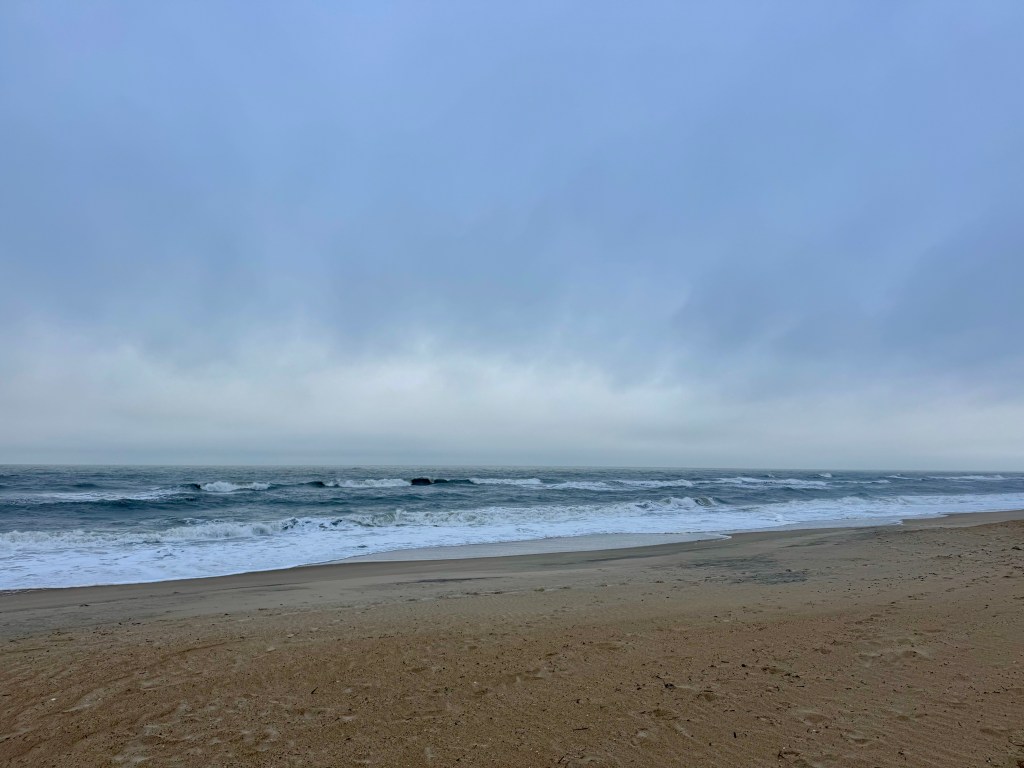
Beach with ocean, rainy clouds
Inclement yet beautiful beach weather, Kill Devil Hills, North Carolina

In my mind, as we planned the trip, I thought we might venture to more locations of interest… Elizabeth City, Currituck, Cape Hatteras, or even Northampton County or the Great Dismal Swamp. Spending more time in the car just sounded like NO fun, so those excursions will have to wait until another day. All of this continues to underscore how hard travel is in this part of the country. Everything is so far away, and so dependent upon bridges, which did not exist until 1928. Understanding how people traveled from this location to West Tennessee in the 1830s is still a topic I am keen to understand, and I look forward to discussing the topic with researchers who have expertise in early migratory patterns of eastern NC.

Here are new-to-me ideas that I am considering:

  • The height of dunes
  • That the Carolina outer banks dunes build up from southeastern winds and are taken away by northeastern winds
  • The consistent prevailing winds
  • That other than Native Americans, there were very few people on the outer banks until after WWII
  • The brackishness of the Albemarle Sound water shifting with the presence of sea inlets vs. their absence, which impacts type of fish and fowl present for hunting
  • Jobs for people shifting with the season, depending upon temperature and weather conditions impacting available fish/clams, and this would have been true also for indigenous peoples
  • The many rivers emptying into the sound at various points underscoring the relative ease in early history for waterway travel vs overland travel, especially prior to bridge construction
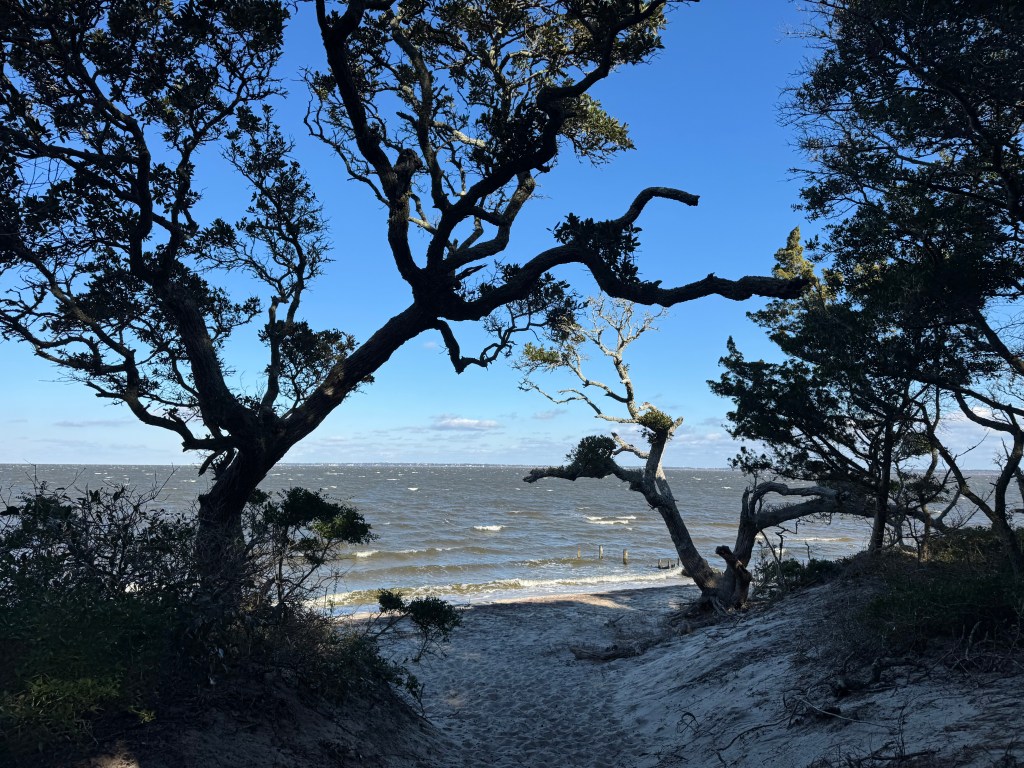
Looking through evergreen trees at Albemarle Sound
View of Albemarle Sound from Roanoke Island, Lost Colony

Successful Adventure

I can say, once again, that travel to see an location in-person has advantages over simply reading about the area or doing online research. So far, there is no huge revelation or break-through to report this trip. It would be unrealistic to expect such miracles for every trip. Yet, it is easier to understand what I read and research about the location and its history, now that I have visited. I can contextualize the information I acquire. It also may be easier for me to pose questions and theories that are sensible, and to locate the researchers/information I need to further my understanding and acquisition of data.

The Central to Northern Outer Banks of North Carolina (OBX) during winter months was a fun trip and worth the effort.

May all your 2025 adventures be all you hope, for connection, experience, enjoyment, and fulfillment!

Genealogical Geography 2/3

The adventure is underway! The mission is to spend time in the Outer Banks of North Carolina, mostly as vacation, but also to experience the area that hosted the ports of Roanoke and Currituck in colonial times until 1800.

We drove from early morning until evening, and since now it is winter, it was dark when we left and dark when we arrived each day at the next location. Even though this is a road trip, I would not consider it a leisurely one, but rather a hard push, because that is the way we roll… eager to get to the destination! We traversed the full length of three states to get to the North Carolina Outer Banks.

Yesterday was our first full day here, and it was cold with periods of heavy drizzle and rain, but will be the warmest day of our stay. Today the sun is shining, though cold and breezy with 27 mph sustained winds and a high of 43 degrees F. Tomorrow will be even colder with 36 degrees predicted for tomorrow’s high. Maybe we understand now why this is low season for Outer Banks tourism?

We explored the northern reaches at Corolla and Currituck County, and we have been to Roanoke Island. I am processing what I have experienced and seen, and now I will share my points of contemplation, so far.

  • The states of Tennessee and North Carolina are really, really long. With newly uncovered legal documents that cite Jefferson Thomas Williams (d. bef 1870, Fayette County, TN), I need to retool his timeline to understand how his move from Northampton and Warren Counties in North Carolina to Fayette and Haywood Counties in Tennessee transpired 1830-1840. Was it one, one-way move, or were there some trips back and forth, and how did he, his wife Nancy Daughtry, and their son James L. Williams travel?
  • Is there any chance that they used river or sea routes, like to the Mississippi River from Kentucky and Missouri and downriver to Memphis, or to through the Albemarle Sound to New Orleans and up the Mississippi? If they did use waterways, would there be any yet existing documentation of their trip?
  • Asking questions about the colonial era Great Dismal Swamp or the early ports of Currituck and Roanoke tend to provoke surprise and often confusion. Evidently, the era/subjects are not common questions for park or visitor center workers. So far, I have found no printed material about the ports. It is fair to say that the average person has no idea about existence of the original Port Roanoke.
  • As when visiting Rome or Greece, even the eastern American seaboard exhibits evidence of many layers of history from the First Americans of indigenous origin through to modern times. I am reminded that some North Carolina genealogists have been frustrated that much of the regional research focus for decades was upon the Civil War and the periods just preceding and following the conflict. Common surnames and lack of digitized or centralized early records made it too difficult to research, with any success, families and individuals in the Carolinas and Virginia during colonial periods. Recent advancing technology, computer/digital/information sharing/DNA, brings more information for us to reliably examine.
  • There is a need to look further at modern researchers doing marine archeology in the Albemarle Sound, the tributaries, and Outer Banks. We also should encourage more research.
  • We need to do more study of the North Carolina State Archives online digital records and do further analysis of the colonial and early United States Outer Bank port information showing the parties, products, and vessels and what we can learn about the families, individuals, and locations cited.
  • Walking on the beach, even with moderate/normal conditions, the blowing of the sand is impressive, making it possible to appreciate how the terrain shifted over the years to open or cut off outlets from the Albemarle Sound into the ocean for sea-faring vessels to traverse. We note that the Wright Brothers National Monument at Kitty Hawk, is on a high point that was once a very high dune used by the brothers to test their gliders. In order to stabilize the dune for installation of the monument, workers planted vegetation… it does take work to keep any earth in place here.
  • The breezy winter conditions are a reminder of the wisdom of the Jamestown and Roanoke colony originators that the actual coast/beach would be a difficult place to establish a community. A bit inland would be better. Having visited both Jamestown and Roanoke Island now, I think Jamestown was more wise… After today, I had a hunch that if I were one of the original Roanoke Colony settlers of the 1580’s, the ones who disappeared and whose fate remains a mystery, I might be thinking of moving farther inland too. Just saying…
  • I visited the Outlets Nags Head today at 7100 S Croatan Hwy, Nags Head, NC 27959 , the place along the Outer Banks that, I read prior to my trip, is a likely location of the original Port Roanoke where, at that time, there was an opening through the banks deep and wide enough to allow access from the sound to the sea. Now, in common parlance, “Outlets” refers to a retail-shopping outlet mall. Do you think the potential double entendre of *outlet to the sea* was intended when naming Outlets Nags Head? I wanted to ask someone at the mall if there was an awareness of the colonial Port Roanoke port having been at the location, but I found no one official to ask, much less to inquire about the name. Tired for now of people looking at me funny, I did not ask the store clerks busy with holiday shoppers.

Thanks for following along. More observations as they come!

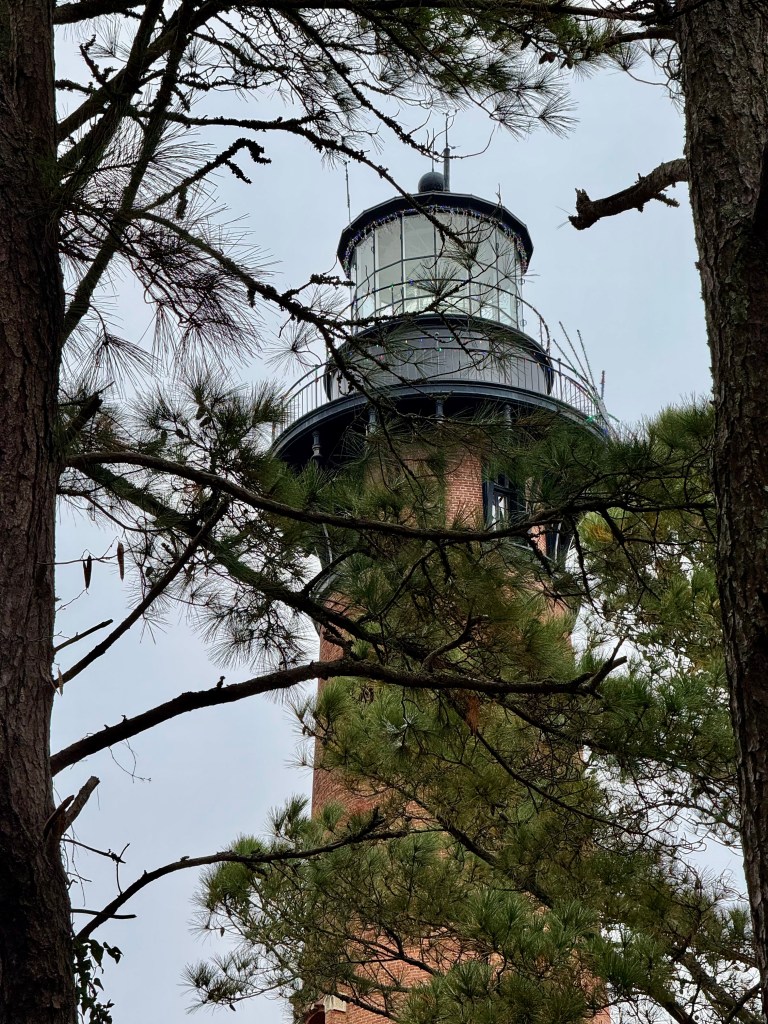
Currituck Lighthouse at Corolla, Currituck County, North Carolina, built in 1875