A Mosaic Approach to Healing From Estrangements (6/6)

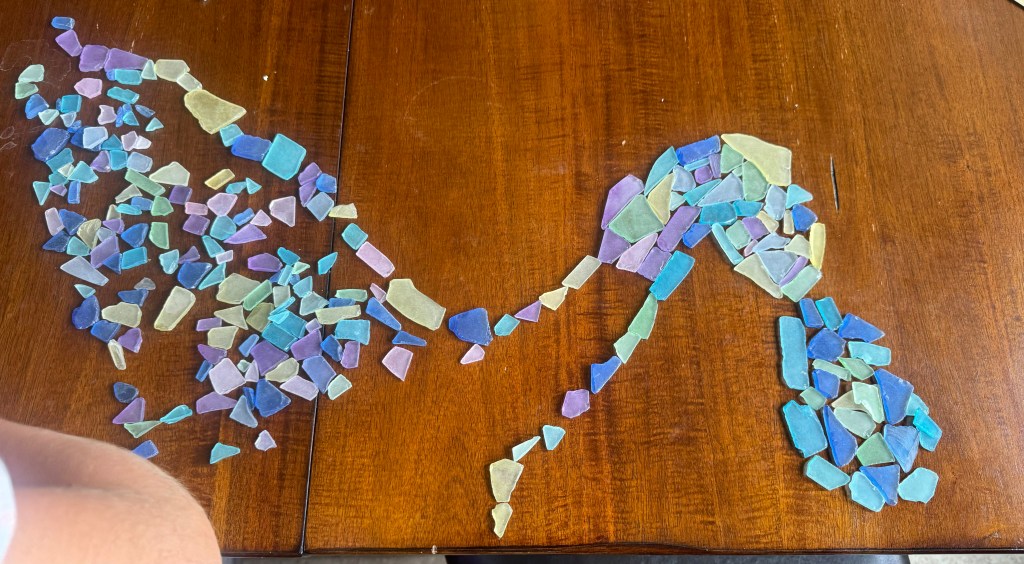
A sea glass mosaic dragon in progress…***

Recent world events have me thinking again about how distant people have become from each other…distant from their prior accustomed social circles… churches, families, neighborhoods, schools, friendships. Check my earlier posts in this estrangement series, if you have not already, for discussions about alienation and estrangements and the many causes, impacts, and permutations.

We have spent time discussing the pain of estrangements and how difficult they can be, regardless of where one is in the estranged space. There often is a tendency to want things fixed sooner rather than later, and expectations often are all-or-nothing…and sometimes, to have it “fixed” yesterday. What if there is another way forward that we have not considered before? Rather than all-or-nothing approaches and expectations, regardless of where you are within an estranged situation, consider whether MOSAICS can show another way to move to a better space.

I am a fan of mosaics. Visualize a large piece of art or image which, upon closer inspection, is made of smaller pieces, maybe dime-sized or smaller. Mosaics may be made of glass, jewels, metals, stones, paper, cloth, guitar picks, or pretty much any other object you can fathom. You also may have seen large images that are made of tiny mosaic pieces that are tiny photographs of non- or semi-related subjects.

Abstract mosaic based upon color and directionality

Often children or art students experience mosaic projects in their art classes, or as kits gifted or purchased. The finished items can become wall art or stepping stones.

In travels, wonderful mosaic creations are destinations of awe. One remarkable location is The Cathedral Basilica of St. Louis. It is the *new* basilica in St. Louis, Missouri, not the original edifice on the Mississippi River. Many of the spaces within the cathedral feature glass mosaic installations by over twelve artists, including Tiffany Studios, each artist designing a specific room or area. With the right light, the mosaic images are spectacular and inspiring, whether viewed at close range, or at the highest expanse of the interior dome.

A example of a basilica installation. Photo by Pixabay on Pexels.com
A basilica mosaic starts with small pieces, fit onto a cartoon of a designed image. Design can occur with many inspirations and methods. At the essence is the single mosaic piece.

One of my favorite experiences with mosaic has been to rescue a beloved object that has broken and to refashion it as an art piece. Sometimes there is nothing to do but throw away broken glass. The object may be so fractured into such small pieces or dangerous shards that the pieces cannot be safely repurposed. If one is fortunate, the broken pieces can be gathered safely, placed artistically, and mounted onto a base that can be framed, using forms of adhesive and grout to secure the items so that we can visually enjoy them again.

Created from broken fragments of a small, gifted Japanese teapot

Similarly, found-glass fragments can be collected, whether from clearing an old building site, an attic, a cellar, or estate sales. One can find vintage pieces, from broken medicine bottles, jars, stoneware, glassware, or china. Each piece has a story. If the items are from your past or the past of people you know, you sense the story that they hold. More often, the fragments’ origin stories are lost to time. Still, these antique items can be used as mosaic pieces to fashion a larger piece, either strictly for decorative use, or for practical use, including coasters, hotplates, or garden installations. The idea of lost, broken pieces from the past, composing an integrated piece of art that speaks to us, truly, is a special, inspiring act of creativity.

Some found objects and glass, joys to locate, with potential for a larger creation

I recently, evidently late-to-the-party, came across a technique for making mosaic designs from isometric graph paper, which features equilateral triangles. The technique is in common use among some quilters and other fiber artists who design three-dimensional effects. Colored pencils are applied to individual triangles on two-dimensional paper, the colors used to indicate shading and highlight of shapes. It is you, the artist, who makes the choices required to bring the flat images into 3-D relief. The choices are boundless/unlimited. Practically, the grids are translated to mechanisms to bring a fabric or item to life. For us, the practice shows how our mind can move pieces around just with our perspective and ideas. Each *piece* or triangle is important, and can be a part of something bigger, depending upon our perspective and inspiration.
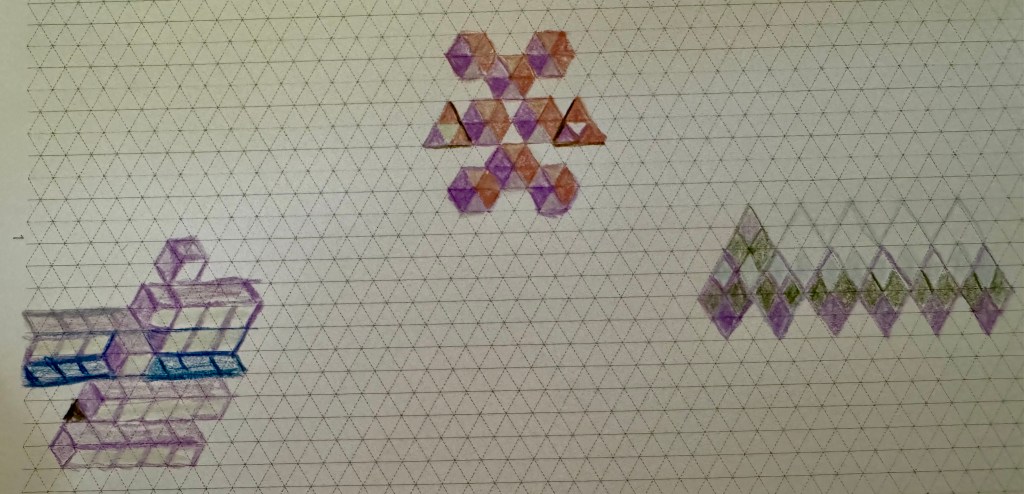
Isometric patterns emerge with patience and colored pencil

So, these ideas inspire me as I think about estrangement and reconciliation.

Part of the inspiration comes from awareness of the wonder in acquiring one mosaic piece, not only as an object individually, but for its potential. After all… I suppose, technically, a piece is just a piece. It is only a MOSAIC piece through its potential to be acquired and given a place in a larger arrangement in which it is but one component.

What if, wherever one is within an estrangement–whether the one who estranged, the one from whom the other estranged, family/friends of the estranged parties, or one who is in the middle–one finds it possible to engage with the other briefly in a safe way…a friendly exchange, a congratulations, a birthday greeting. Maybe that’s it. No more. It is one element, one mosaic piece. Or, what if another, neutral but loving and concerned friend or family member within the situation provides support to you in some way, validating your sadness or anxiety, giving you reassurance and expressing concern? Well, that’s another mosaic piece. Maybe that’s it. No more. Perhaps you start to notice that you feel a little, tiny bit better about things, maybe some relief? Maybe some safety? Hmm. That’s another mosaic piece. Maybe that’s it. No more. Or, maybe it’s easier to pray about the situation with a little bit more positivity and genuine love. Yes, you guessed it…another mosaic piece. Any of these or other situations can occur individually or sequentially, and any positive or lateral movement is something to be noticed and accepted.

So, mosaic pieces, in this case, come as a surprise, a gift. They are NON-LINEAR–one does not necessarily lead to another, and if another piece arises, it may have nothing to do with the first one. When you receive the gift of a mosaic piece, you accept it, as best you can, and try to not flip into an all-or-nothing stance… of needing to single-handedly wish/compel a full reconciliation. In a way, accepting mosaic pieces is a way to describe the fact that we are in a situation over which we have very little control.

Sea glass inspiration

The key is the openness to the experience and seeing the non-linearity. You do NOT have to totally open the door just because you accepted a mosaic piece that you find hopeful or helpful.

Once you discover more mosaic pieces, you may find that they come to you from different estrangement experiences that are not connected in any way. Maybe you attend a reunion and discover information that is healing. Maybe from a memorial service you connect with a mutual acquaintance of the deceased. You have a conversation with a friend or trusted person that gives insight into a situation that broadens your perspective and softens your heart. Any of these experiences were not sought by you, and they perhaps were directly related to your estrangement experience. They likely come as total surprises to you. Yet, the insights from these singular events can apply to the big picture, including the estrangement. And each experience is another gift of a mosaic piece in your growing acquisition.

Another analogy is that as you collect one mosaic piece, you place them as you consider layout. In doing so, a larger picture emerges, based upon hints or features of the pieces you amass. Mosaic pieces’ size, shading, and detailing hint toward a larger view and inspire a comprehensive arrangement. The same approach applies to emotional and intellectual mosaic pieces. As you consider them individually and in totality, you will integrate the concepts and experiences. Consideration can occur through contemplation, journaling, conversation, art, or music. All of these processes can take time, and likely they will shift with time, which is a normal growth and healing process.

Now I want to add a twist to the mosaic analogy. Depending upon your situation, the mosaic perspective is a tool to CREATE a solution to a particular dilemma. If, for example, you are in crisis, yet you are estranged from those who do care about you, is there a way you can find someone, an intermediary, to create a safe way to communicate your status and receive a modicum of support? Maybe a P.O. Box for notes exchanged? Maybe a blog for posting updates? Intermediaries sometimes create private Facebook Groups for rallying around a person in crisis, including illness or grief, and these are monitored/facilitated pages that can be a safe place to communicate. It can be relieving and healing to know that you can create mosaics as bridges toward connection while maintaining boundaries and safety.* A psychologist or trusted pastor may be helpful in creating such a mosaic or mosaic piece that would be safe for you.**

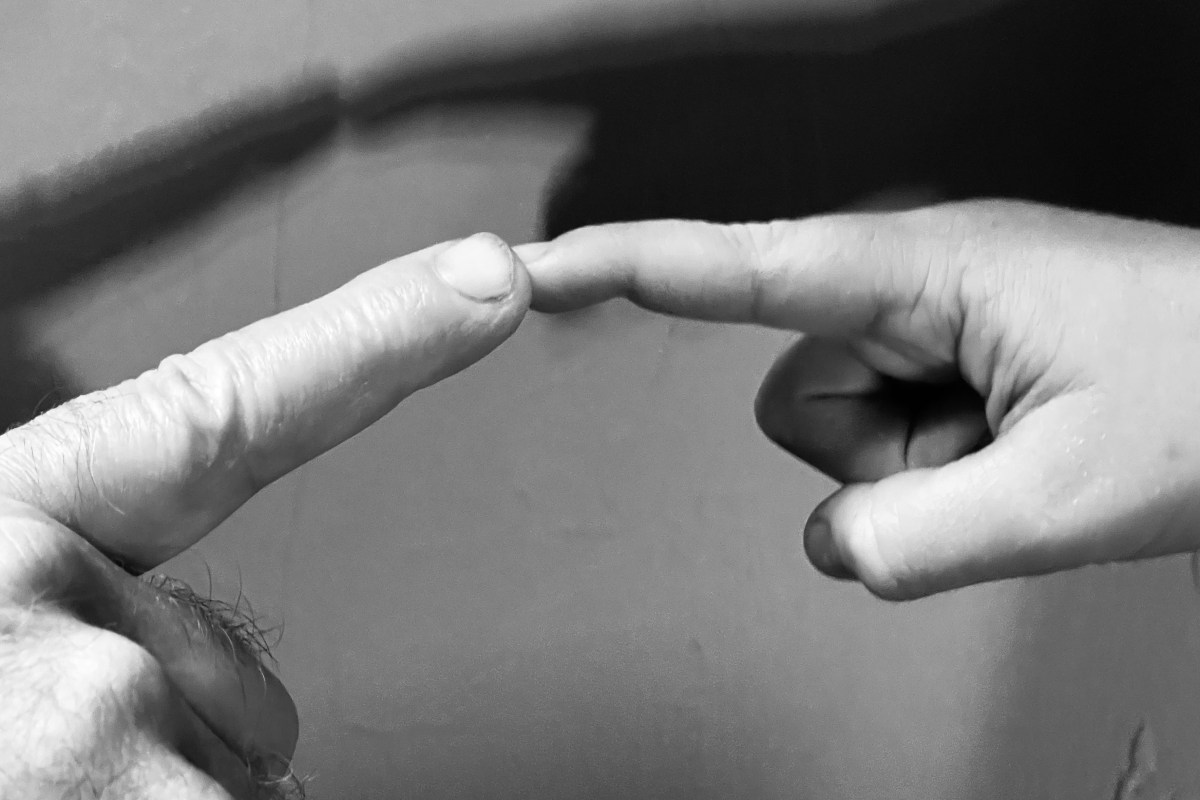
With this pen for perspective, example of how two tiny rocks found separately, each a pleasing shape, fit together nicely. Just two objects… all that is needed for this array.

Mosaic pieces, whether objects or experiences, are bits that we can accept when they come our way. As we collect them, we begin arranging them in ways that, if nothing else, help us to cultivate a sense of peace, healing, and compassion, allowing us to move forward in our progress toward wholeness. As lovely as large mosaic works may be, even small, meaningful ones may be all that we need for our peace.

May you find yourself open to seeing mosaic pieces as they arise in your life and to receiving comfort from them.

The concave edges for the circular “O” were an inspiration for this piece.***

*As always, individuals need to take into consideration their actual safety and should maintain necessary physical and emotional protection. Even in situations requiring significant boundary maintenance, mosaic concepts can be used for internal healing and reconciliation work.

**A recent article in the New York Times underscores what apparently is a troubling trend with “therapists” using TikTok for advocating estrangements from family, “Is Cutting Off Your Family Good Therapy?” Ellen Barry, New York Times, Published July 14, 2024, Updated July 17, 2024. While the trend ostensibly is strictly for people in abusive situations, the worry about the trend is several-fold: 1) The article stresses, correctly, the idea that therapists should not be telling clients what to do… boundaries are for patients to set. 2) TikTok videos about any mental health situation lack individual consultation and considerations, setting people up to assume a diagnosis or to take *advice* that should not apply to them. 3) The trend smacks of one-size-fits-all treatments which can contribute to much harm regarding individuals’ understanding of their situation and lacking the nuance and individuality each person deserves. 4) The article suggests the trend promotes a sweeping praise for and assumption of estrangement as beneficial. In fact, most people, in most situations, can establish healthy boundaries; improve communication; and empower individuation without the need for estrangement, even if they have episodes that are bumps in the road in their relationships with their friends and family. A good takeaway from the article is that each of us should guard against any feel-good trend, whether from a book/article/video/social media post/expert who advocates estrangement as a quick-fix for your mental health. Get second/third opinions, and understand all of your options and that situations/people are dynamic throughout one’s lifespan. Estrangements are not without serious negative risks for all involved. https://www.nytimes.com/2024/07/14/health/therapy-family-estrangement.html?unlocked_article_code=1.-k0.poJa.QXgEL44FIWUq&smid=url-share

***Special thanks to the student artists who contributed to this blog with their inspiration and artistry.
Multi-Generational Trauma Impacting Estrangement (4/6)

So far, we looked at estrangement from several angles. We looked at it from the perspective of one who needs to estrange from another; from that of one who experiences that someone dear to them has pulled away; the particular difficulty when the reasons for estrangement are partially or totally unclear; and the confusion of being in-the-middle between estranged parties.

Today let’s look at another factor that may be invisible to any or all of the estranged parties. That factor is a trauma that occurred in one or both families of the parties one or more generations prior to their birth. These traumatic events may be referred to generational, inter-generational, trans-generational, or multi-generational trauma, expressing that a significant trauma experienced in one generation can impact the lives of those in succeeding generations.

As you read today’s blog entry, be aware that the topic of multi-generational trauma in our estrangement discussion was planned from the outset of the series as a result of genealogical findings and experiences. As the horrors of current and recent events have unfolded, there are too many examples of the trauma close at hand. While these current traumas are direct examples for us to consider, they are not the focus of our discussion. The emphasis here is upon the need to be aware of the potential for the presence of multi-generational trauma within any estrangement, even if it is invisible or not consciously known by any or all of the parties involved.

While this post is not meant to be an authoritative, academic investigation of the phenomenon of multi-generational trauma, it is worthwhile to look at the concept; ways it can be viewed; how it can apply to us and those we love; and what it can mean for our future, outcomes, and happiness.

On the one hand, that a trauma will affect future generations of offspring can seem very intuitive. If a war breaks out and if a family’s safety is threatened, they evacuate, experience bloodshed, barely escape, and find safe harbor in another country, never to see their homeland again, that is traumatic. It is traumatic to each person who experienced the trauma, whether adults or children. If there is physical harm to any of the parties and/or if there is significant loss of financial stability, there is impact upon each family member. Are parents available to care for the children; are the children able to get their education; are any family members further victimized due to their tenuous situation? Any of these, or other, consequences of the trauma create impact in addition to the original, first trauma.

Even children who are born after this traumatic event may suffer from the impacts of the trauma. They may be born into poverty; parents may be focused upon providing for physical needs of the family and unable to attend to them otherwise. There may well be post traumatic stress disorder (PTSD) impacting the mood and availability of the adults, with possible additional secondary substance abuse or other addiction impacting the individual and family system.

These issues alone, situational and emotional, can lead to a domino effect in successive generations for risk for disease, educational opportunity, and ability to procure employment.

Even if we just look at emotional issues with a bit of a magnifying glass– what impact would the trauma have upon a surviving parent’s emotional health and ability to parent secure, healthy children? At risk for the children are attachment, trust, security, appropriate emotional expression, risk for fear of abandonment, the ability to maintain stable relationships across time, and skills in healthy conflict resolution. Problems in any of these important elements of human development can contribute to potential for relationship problems, future ability to parent, and risk for estrangement later in life.

Potential Cellular Changes?

Emerging science, as yet not fully understood, reveals that trauma can impact how our DNA is carried in our bodies and transmitted to our offspring. Yes, really. The concept is called epigenetics, and the basic premise is that when one experiences significant trauma, it can impact one’s biology in a way that impacts one’s genes’ ability to be expressed or to function as intended.

There is a fair amount of evidence that Trauma (and the capital T is intentional, to differentiate from trauma with a small t*) impacts our biology. When we are under siege, our body is in full-on alert, and all systems are activated to fight or flee for our lives. That is how we have survived thousands of generations on earth, rampant with fires, floods, and wild animals. In addition to natural dangers, humans have succeeded in finding all kinds of horrors to which we can expose each other. Some horrors are unintentional by well-meaning but misdirected people. There are children who were reared in eras with peculiar “how to raise your child” directives that were meant to be cutting-edge instructions for parents to raise the perfect children. Of course, wars and unspeakable cruelty of all sorts by broken, power-hungry, and evil people and systems wreak horrible Trauma, whether sudden and brief or prolonged.

Please know that Trauma or trauma, while impactful, does not have to be experienced by anyone as necessarily something that individuals cannot overcome. During an ongoing Trauma or trauma, it can help if one can have periods, even brief ones, to withdraw to a place of calm, physically or mentally, to bring down pulse and respiratory rate. Additionally, it helps during, or afterward, to express emotions through talk, writing, any art form and to have connection with others. When people can be in a safe place with appropriate support, there are treatments and modalities that can be very impactful in supporting an individual’s ability to survive, heal, and thrive despite the trauma. That is not to minimize the trauma, however, which does impact one’s life and turns to a different direction, one way or another.

We are interconnected. Clockworks, Monymusk, Scotland, UK

Sources of Trauma and Ability to Identify

For our purposes, understanding our relationships with others, especially through the eyes of a genealogist, it is important to know that trauma can be an invisible element of broken connections. Even for traumas that are historically documented in newspapers or books, the trauma may not be known to us because the family did not talk about it. Other traumas are not to be found in newspaper articles or books, because they were private occurrences, likely borne as secrets.

Generational traumas against ethnic groups are significant issues indeed. While there are commonalities among individuals experiencing ethnic targeting or ethnic cleansing, there also are specific impacts informed by the specific story and circumstances of the impacted ethnic group, whether First Americans, African American enslaved, Jewish, Ukrainian, Palestinian, or other groups. The associated situations, dangers, and threats would impact each family.

Trauma can be visible as an event known to have occurred, such as harm or displacement during a war; the physical impact of a natural disaster such as a major tornado, hurricane, flood, or wildfire; or accident such as a car, train, or airplane crash or urban fire.

The source of trauma also can be invisible to outsiders. Invisible traumas include displacement from war or conflict accompanied by avoidance of affiliation with one’s ethnic group–passing as a member of another ethnic group in order to survive; bearing the burden of a secret assault; carrying an untimely or unwanted pregnancy; and secretly experiencing violence or family substance abuse at home. In past eras, having a family member with significant mental illness was kept secret.

Individual Differences in Experiencing Trauma

It is important to realize that even with the SAME trauma, not all people, regardless of whether they are children or adults, will experience, react, or process the trauma in the same way.

Repression and Denial. To not recall a particularly horrible Trauma is an unconscious defense mechanism. It is not unusual to find that someone has repressed an abusive or traumatic assault. Additionally, not talking about an event, even if they do recall it, may be required for an individual to function, due to the pain/fear/shame associated with the event.

Shame and Guilt. While children are particularly prone to internalizing traumas and incorrectly seeing themselves as responsible for negative outcomes, adults certainly also engage in self-blame. When there is additional change in status or power, victimization by abusers, or denial of one’s self or culture, there is additional shame and guilt likely to be present in survivors of the trauma.

Fear for Safety. Sometimes the original trauma is problematic for the individual because there is fear for the safety of themselves and/or their family. The danger may be from the perpetrator, someone else who may punish the victim should it be discovered, or family conflict or violence if the situation were to be discovered.

Loss of Family or *Institutional* Knowledge. Sometimes the victim has died, leaving a young child who either does not know or does not understand the event, so the story is not passed down. Even when the parent survives, physical or emotional conditions can impact that parent’s ability or desire to communicate, not only the occurrence of the trauma, but even the broader picture of the family’s story/culture/history.

Our ancestry and family stories extend back so many generations! Edinburgh, Scotland, UK

Why Does Generational Trauma Matter in Estrangement?

In the course of doing our genealogy, it is inevitable that we will run across an ancestor, either ours and/or an ancestor of a cousin, who has behaved badly. How badly the specific ancestor behaved can be across a spectrum, with the worst extreme being horrible, injurious behavior or unexplained, devastating abandonment. How do we understand this person and his/her impact?

In no way do we wish to condone or excuse the bad behavior, but as researchers, we are looking for the truth and to understand the story in the broadest, most informed perspective possible. Someone who has acted this badly may well be someone who experienced an abuse or trauma by someone, somewhere. If we keep that fact in mind as we do our research, we may find bigger pieces to the puzzle that put the individual’s behavior in context and expand our understanding of their family, community, or micro culture. Interviewing descendants; newspaper searches; court records; and church records can be sources of this information, along with DNA evidence.

In my experience, it is not at all uncommon to see an impact of the problematic or troubled ancestor, whether a more recent kin, such as parent or grandparent, or a more distant ancestor, upon the lives or behavior of the descendants. Examples include poor self-esteem; over-controlling or limited involvement in parenting; emotional dysregulation; difficulties with anxiety and depression; a tendency to cut others off (estrangement??) as an alternative to the hard work of conflict resolution; over-focus upon somatic symptoms as unconscious expression of anxiety or depression; excessive and injurious minimization/avoidance/humor/deflection to avoid connection, intimacy, or communication. Likely, all of these response styles are unconscious on the part of the bad actor. NOTE: These characteristics or behaviors DO NOT prove existence of trauma. I only intend to encourage you to show grace in your response to family members who may have these symptoms or tendencies and realize that it is POSSIBLE the the symptoms may have a more complicated history or origin, reaching back generations, than even they know.

Detail of ancient wall, Isle of Iona, Scotland, UK

A Measure of Humility or

You Think You Already Know, but Do You Really?

Wait, wait– what if the current estrangement is with a sibling, a cousin, an offspring, or someone we “know.” We share their history, their DNA, and to our knowledge there is no generational trauma… therefore, our loved one cannot be suffering from generational trauma. Otherwise, we would know it. Right?

NO. You cannot make that blanket assumption. Here are reasons you cannot assume that you know.

Even if you share DNA ancestors, you did not inherit identical autosomal DNA, even with full siblings. In that case, if there were epigenetic DNA changes as a consequence of trauma, each of you may have a different DNA heritage.

You inherit different things from each ancestor, which also explains different eye and hair color, facial features, and personality. And those inherited characteristics also make each person’s experience unique.

Each person’s personality responds differently to the same parenting.

Even siblings have different histories that impact them, including birth order; how each family adult interacts with them; educational exposures; peer exposures.

AND you may not know your full history yet. Imagine the shock of being 50 years old before discovering that your grandparent is an adult child of an alcoholic, discovered when the grandparent and their siblings start talking freely about their childhood, in unfiltered discussion in your presence. Suddenly, with this new information, the family dynamics make sense in this new light!

Or suppose new DNA findings show a different ethnicity from what you thought you were. The new finding can put a familiar family story into a new light or context and point to generational trauma and its impact across several generations that you now can plot? One example is former U.N. Ambassador Madeline Albright who, at 60 years of age, discovered her Jewish and holocaust ancestry and family history when it was printed in an article about her in 1997!

Even increased insights into yourself as you mature and understand the world better can help you piece together family histories, personalities, and tendencies that show family complications and complexities you never realized existed. There is a benefit to maturity.

We have so many ancestors… we will never know all of our relevant histories and what has impacted our personalities and lives. So, we are naive if we think we know it all.

In Conclusion

We must understand that where there has been an estrangement, there may also be a significant generational trauma history. That trauma, whether in our ancestry; in the ancestry or recent history of the other person in our current, personal estrangement; or in both can unconsciously impact perspectives, reactions, and behaviors in significant ways. Even understanding the POTENTIAL for the existence of a recent or generational trauma can create the beginnings of a thaw in the the relationship and openings for renewed connection.

William Williams

* Trauma with a capital T typically denotes a significant, recognizable event in which one perceives risk to life, while trauma with a small t represents a more sustained, possibly less visible, but no less impactful event or series of events, such as ongoing emotional abuse.”* Trauma with a capital T typically denotes a significant, recognizable event in which one perceives risk to life, while trauma with a small t represents a more sustained, possibly less visible, but no less impactful event or series of events, such as ongoing emotional abuse.

Resources

Multiple Resources for Stress and Trauma, American Psychological Association, apa.org

DeAngelis, Tori, “War’s Enduring Legacy: How Does Trauma Haunt Future Generations?” American Psychological Association, Oct 12, 2023, https://www.apa.org/topics/trauma/trauma-survivors-generations

Zimmerman, Rachel, “How Does Trauma Spill From One Generation to the Next?” The Washington Post, June 12, 2023, https://www.washingtonpost.com/wellness/2023/06/12/generational-trauma-passed-healing/

In-the-Middle! When People You Care About Become Estranged from Each Other (3/6)

James River at Richmond, Virginia

In-the-Middle can be a cozy, happy place to be– among good friends for a celebration or cheering on your favorite team with like-minded fans. In-the-Middle can alternately be an unpleasant place to be– at best, a place of uncertainty of your spot and unable to see your way forward; or worse, between two friends who are in the midst of a vicious, hurtful, possibly inexplicable, and seemingly permanent rift.

Today we will pivot from our outlined plan of presentation briefly to talk about an issue that does arise for you, one hopes, never, or exceedingly rarely.

What is one to do when your close friend or relative asks you, explicitly or implicitly, to not associate and/or communicate with the person and, in fact, you discover that the friends have become estranged?

Depending upon your experiences, this may seem an easy question to you, but I assure you it is not always easy. In fact, it can be harsh and complicated, even hurtful, resulting in finding oneself in a no-win situation with no easy resolution in sight. How should one proceed?

Here are some considerations that may help people find their way through the dilemma.

What are the facts and revelations that have resulted in the estrangement?

Is there evidence of dangerous behavior or threats to safety?

Is there substance abuse contributing to behavior or actions of concern?

Is there untreated mental illness present?

Who may potentially be harmed or threatened by this person, and how?

Is there evidence of new concerns about behavior or boundary infractions from which individuals need to protect themselves?

Is there lying, disinformation, manipulation, and/or triangulation occurring, pulling people into conflict with each other?

Who is being threatened… the person issuing the estrangement; elders or children connected with either party; and are you potentially a victim, as well?

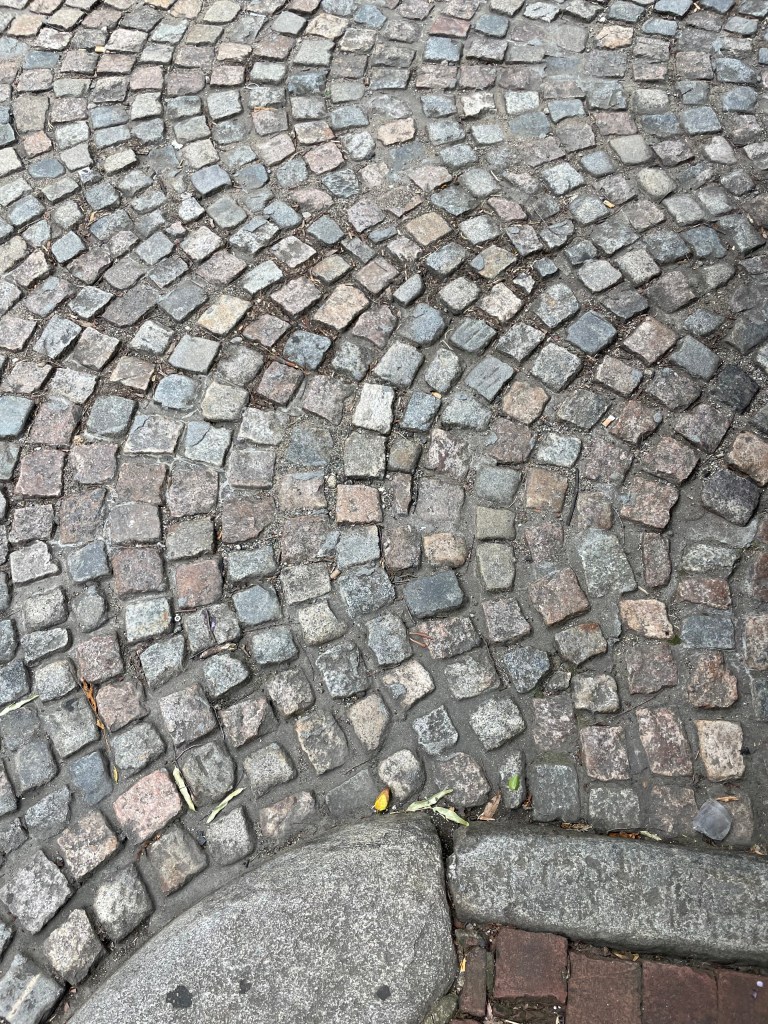
Richmond, Virginia Road Detail

Has there been enough time to safely gather the information needed to assess the situation, allegations, and facts?

An extreme example, for the sake of illustration: In national news recently a man, married with adult children, was arrested for alleged serial murders of several women, with more possible charges to come. By current accounts, the wife and children had no idea of the man’s behavior leading to the arrest. None of them have been to visit him in jail. This sort of discovery of information about someone you love is highly unsettling, frankly shocking, and underscores how new information about an individual can impact assessment of one’s personal, financial, and emotional safety.

Understanding the safety and security issues of all involved, of course, can help assess one’s stance in supporting and/or participating in the estrangement.

Are you able to honestly see another side to the person… to admit that your assessment of the person was incomplete, inaccurate, or just plain wrong?

Arguably, I think, one of the hardest things in life is to admit one is wrong about… anything; but especially about one’s assessment of a person.

I have seen families torn apart when a revelation, such as was described in the extreme example above, was not recognized by one or some family members, who insist upon supporting the offending party, even blindly not acknowledging the new information at hand. The danger of this lack of acceptance is obvious and often will be the reason that the party issuing the estrangement will be compelled to issue an ultimatum to friends and family in order to assure the boundaries of their safety and security, and of those for whom the person has responsibility of care.

“If you have Uncle _____ at your home for Christmas Dinner, let me know; I cannot be there with my children if he is present.” Such ultimatums are made out of a decision, right or wrong, to set boundaries for perceived need for protection and safety, at least emotional, if not physical.

What about a less-extreme example? In this case, the discovery is more about the health of the relationship/expectations/validating behavior in the offending party. Sometimes we observe others’ relationships in a new light and re-assess our interactions with that person. It can be growth to see that a relationship was not as healthy as you thought it was, that you were minimizing or overlooking unhealthy interactions. In such a case, you may choose to back away from the relationship, or approach it in a different way, based upon the new information coming from the estrangement.

CAVEAT: What about individuals who falsely assume the danger of certain individuals based upon their prejudice or bias?

There are, in some cultures and places, people with very rigid and not-well-informed perceptions about people on the basis of skin color; piercings; tattoos; hair style; religion; ethnicity; gender; sexual orientation; even affiliation with sports team (think Texas vs. Oklahoma or Vikings vs. Green Bay Packers… you get the point). If these, or similar nonsensical delineations, are the reasons a person is issuing an estrangement it makes no sense to go along with an ultimatum to join the estrangement. Uh… no!

Has there been no evidence of dangerousness, but there is an impasse and severed relationship between the estranged persons, both of whom you care for very much?

When there is no danger evident, deciding how to handle your relationship with each party in light of a stance by one or both that you should have nothing to do with the other may be harder to sort. Taking some time to assess what is happening and how best to respond can help you to take a stance. The first objective may be to process what may be a sudden event, revelation, and/or reaction. Since both individuals are important to you, you may find yourself significantly distressed.

For sure, good self-care is imperative, giving yourself space to process and tend to your needs for food intake, exercise, and sleep. Healthful ways of emotional expression can be helpful also, using journaling, art, and music to explore your thoughts and responses. As mentioned earlier, do what you can to engage to gain knowledge and discover what has happened, as best you can, safely and prudently, if you are uncertain about the circumstances of the rift.

Since there may be repercussions for you, and you desire to not exacerbate the rift, it may be helpful to speak with a neutral party to consider the situation, personalities involved, and how the situation impacts you. It can be helpful to speak with a reputable, licensed therapist; a trusted mentor; or a neutral friend whose judgement and perspectives you respect. Sometimes just speaking freely can illuminate the path; sometimes the observations of someone not directly involved can shine a light, as well. Also, once you become more calm, you will be able to engage creatively to discover ways to approach the situation and boundary parameters while still fulfilling what you believe to be a healthy way of addressing specific issues.

Getting feedback also can help you to think through what approach and boundaries you might set on the situation and what could be the potential fallout of each option. You may elect to honor the boundaries the estranging individuals have set with each other and underscore that their issues are between each other, while honestly telling each what you will, or will not, do and that your continued connection or interactions with each do NOT mean that you do not care for each of the two. In that case, you are telling them that you are not going to completely disconnect from either of them, and telling them in as honest and calm manner as possible. You cannot control the reaction of the party (parties), and it it is good to be as prepared as you can for an unwanted reaction, which is why taking plenty of time and utilizing discussion with a third party can be important. If you are fortunate, you can set forth a plan that is acceptable and will provide you some relief. Sometimes, you may set boundaries that are not necessarily articulated verbally, but are actionable for you and work well for the situation, given the circumstances.

Where does this leave us?

Not all people who are in estrangement issue ultimatums to family and friends… “You are either with me or against me.” or “if you choose to talk to ___ that means you do not love/believe/support me.” It is a much easier situation if you are told clearly why they are estranging themselves and let you know that you are free to make your own choice, but that they are issuing for themselves their boundary that they request you respect… For example, to please let them know if this person _____ is at your party, so they can decide whether or not to attend.

I think it comes down to a few key points.

Make sure you are as clear-eyed as you can be about the truth of the situation. Be aware that more information can come up, and you may need to re-assess.

Be sure to protect yourself and any for whom you are responsible, including children and elders, as best you can, and do your best to support others who are doing so.

Know that it IS possible for people to grow and change, so if people are estranged from each other now, they may make another choice later. And sometimes, people grow and heal! They go to therapy; they become clean and sober; they become more insightful. It is a good thing to be open to positive change as a possibility.

Otherwise, people’s estrangements are their own. Not yours. It helps to underscore both things.

You can respect other people’s estrangements, and in fact, you SHOULD, because it is their lives and needs they are acting upon, and you do not know all of the factors that went into their decision. But you do not have to feel responsible for them or for fixing them. From my perspective, this is a hard reality.

Some of the factors we have talked about in earlier segments and will discuss in future ones apply here too. Prayerful people may ask for guidance, clarity, and insights in dealing with their estranged people. Each of you may have skills and perspectives you can bring to the situation, helping others in similar situations navigate in creative ways. For instance, you may help friends plan for holidays, when segments of a family are estranged from each other, reminding them that it is okay to approach traditions creatively, celebrating with parties separately when possible and differently when necessary; holding and maintaining one’s joy for the meaning of the holiday; and engaging in appropriate boundaries and self-care.

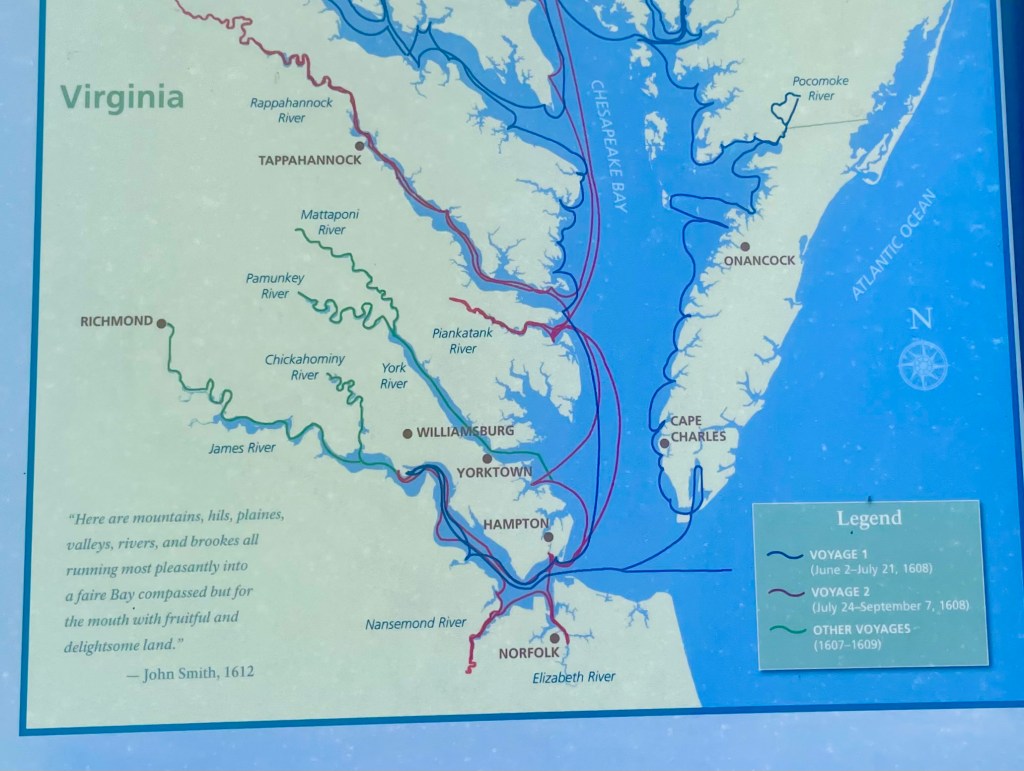
Photo of trail map at Richmond portion of Captain John Smith Chesapeake National Trail.

https://www.nps.gov/people/john-smith.htm

An uncertain journey…

The James River is a navigable river into Virginia, in the lower reaches at Jamestown it is tidal and brackish, used for millennia for transportation inland from the coastal areas, up to the point of the of the river which now is the location of Richmond, Virginia. When you travel upstream by river and arrive at Richmond, you encounter rapids down which folks can kayak. How cool is that!

Currently, the James River at Richmond is a destination for tourists, but it is highly utilized by local residents to hike, bike, and play. It is best if you know the area, how to get there, the location of the various trails, and where to find your way to what you want to experience. If you do not know where you are going, you may find yourself in the middle of discomfort and confusion. There is more than one land mass or island; there are bridges, some of great expanse, to take you from one land mass to another; it is not always clear at the outset if the bridge you have set upon will take you where you want to go; and distance and time estimations, as well as the nature of the path forward, are not easily discerned. At least one bridge, while semi-pedestrian friendly, actually is for delivering motor vehicles to the other side of the river, and it is quite a hike on foot. If you have plenty of water, the weather is mild, you have no timeline, you are in good physical shape, and you are not hauling your luggage with you and wearing dress shoes because you are killing time before you head to the airport (true story– I met someone on my adventure exactly in this situation), you will have great exercise as you enjoy a lovely and historic setting.

The discomfort of not knowing the trail routes; hoping you have enough water with you; and hoping you do not have to retrace your steps to return to town reminds me of some of the feelings and experiences of being in the middle of an estranged relationship between friends.

James River in Richmond, Detail https://www.nps.gov/people/john-smith.htm

The similarities include being surprised, perhaps, at your lack of good information about your situation; having limited control of your circumstances; and not knowing how long the uncomfortable situation will last. At least on a hike, you can be fairly sure there is an end point, regardless how taxing it may be, and to some degree, that end point is within your control, if only because you continue to press onward.

How, when, or if the estrangement between your friends ends, may you continue to find healthy boundaries and self-care as you continue to be a friend to the parties, as best you can be, as long as it is healthful or prudent to do so. And when you cannot continue an active friendship, to wish them well in your heart and pray for continued healing of all concerned.

Street Art at James River Waterfront, Richmond, Virginia

How, when, or if the estrangement between your friends ends, may you continue to find healthy boundaries and self-care as you continue to be a friend to the parties, as best you can be, as long as it is healthful or prudent to do so. And when you cannot continue an active friendship, to wish them well in your heart and pray for continued healing of all concerned.

William Williams